Thursday, 6 December 2018

The 15 Best Responsive WordPress Themes in 2019

It’s no secret that modern shoppers are visiting your WordPress website, reading your content, signing up for your services, and purchasing your products from a variety of technological devices including desktop and laptop computers, smartphones, and tablets.

That’s why it’s crucial your WordPress website’s theme has a responsive design — so your website visitors can easily browse your site while having an equally pleasant experience from any technological device.

Stop wasting time on SEO strategies that don't work with the help of this free PDF guide >>


The 15 Best Responsive WordPress Themes in 2019

With such an abundance of WordPress themes available, finding your responsive theme of choice may be a difficult task. That’s why we've put together this list of 15 of our favorite themes for 2019 that you can review and consider for your own website. Below, you'll find feature descriptions for all 15 options as well as a few key takeaways for those of you who are looking to find a theme as efficiently as possible.

1. Avada

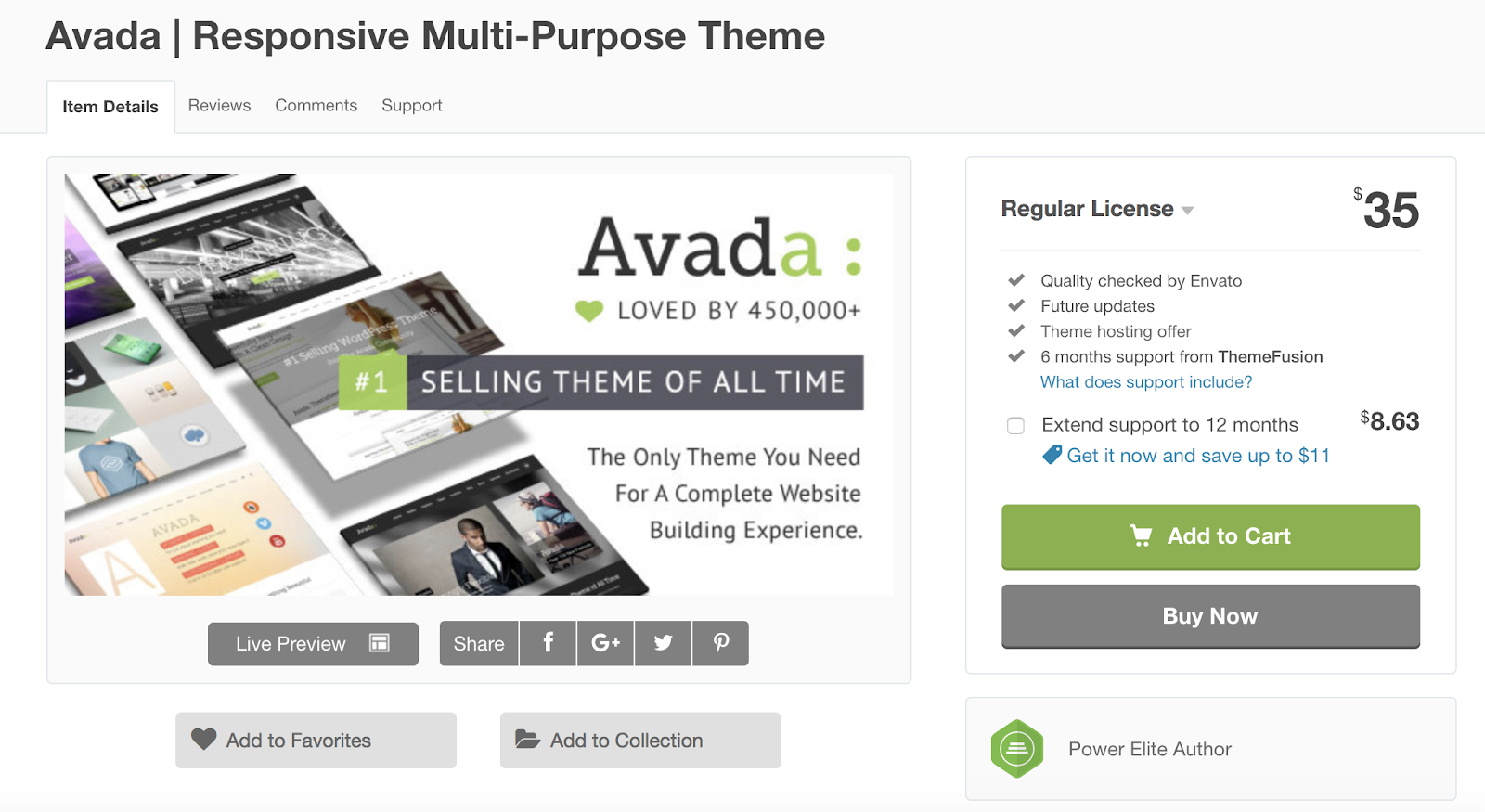
Avada is a responsive, multi-purpose WordPress theme with versatile features and layout options fit for business, creative, e-commerce, and more. With no coding required and a minimalist design, the theme is easy to use no matter your level of web development knowledge. The theme also allows you to disable responsiveness if you create or add something to your site that is only meant to be viewed on one type of device.

Key Takeaways:

  • Multi-purpose theme
  • No coding required
  • Ability to disable responsiveness

2. BeTheme

betheme-wordpress-theme

Source

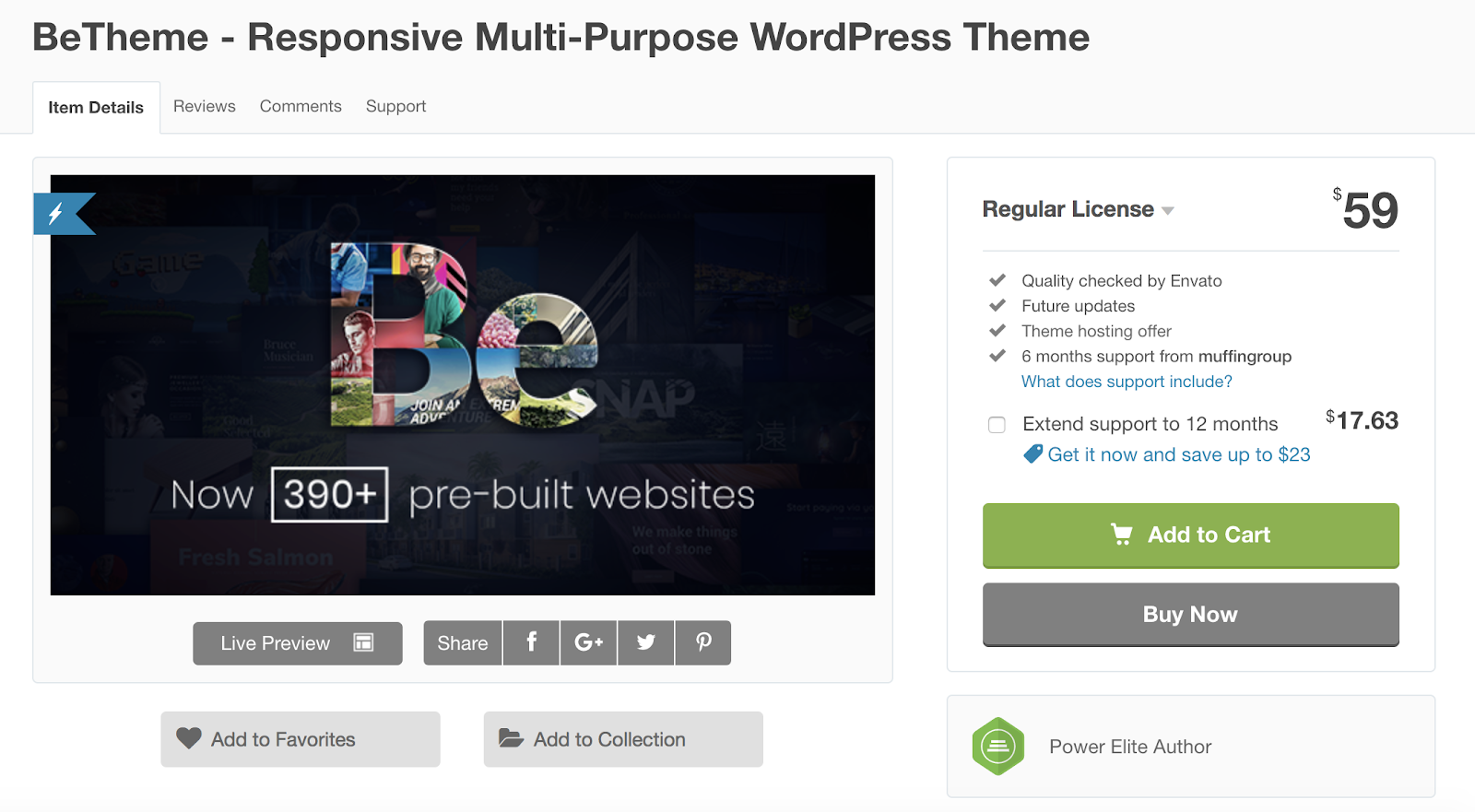
If you’re looking for a responsive, multi-purpose WordPress theme, BeTheme might be a good option for you. BeTheme is also considered a lightweight theme, meaning it’s efficient, quick, and takes up minimal space on your server. With over 390 pre-built websites, you can get started adding your content with just one click. The responsive design allows you to choose minimal headers and other features to fit on smaller screens, so your visitors aren’t overwhelmed by the amount of content they’re viewing in such a tight space.

Key Takeaways:

  • Multi-purpose theme
  • Lightweight
  • 390+ pre-built installable sites 

3. Jupiter

jupiter-wordpress-theme

Source

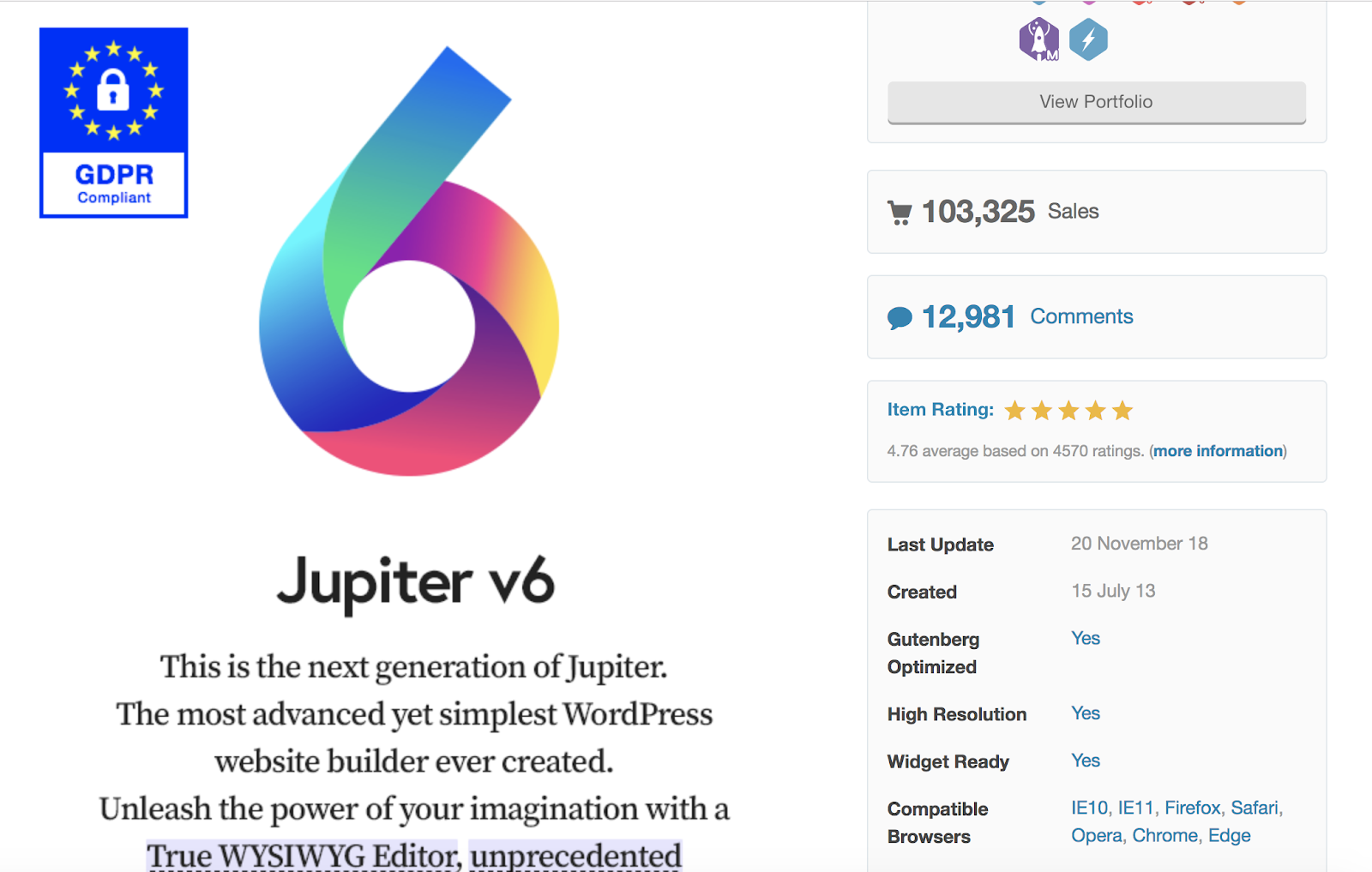
Jupiter is a responsive, multi-purpose theme with a visual page builder that allows you to update and review the changes you make to your content and website in real-time. The theme has WooCommerce integration so you can easily set up and manage your online store straight from your WordPress website. Jupiter is also SEO-ready to help your website rank organically for specific keywords and phrases.

Key Takeaways:

  • Multi-purpose theme
  • WooCommerce integration included
  • SEO optimized

4. Flatsome

flatsome-wordpress-theme

Source

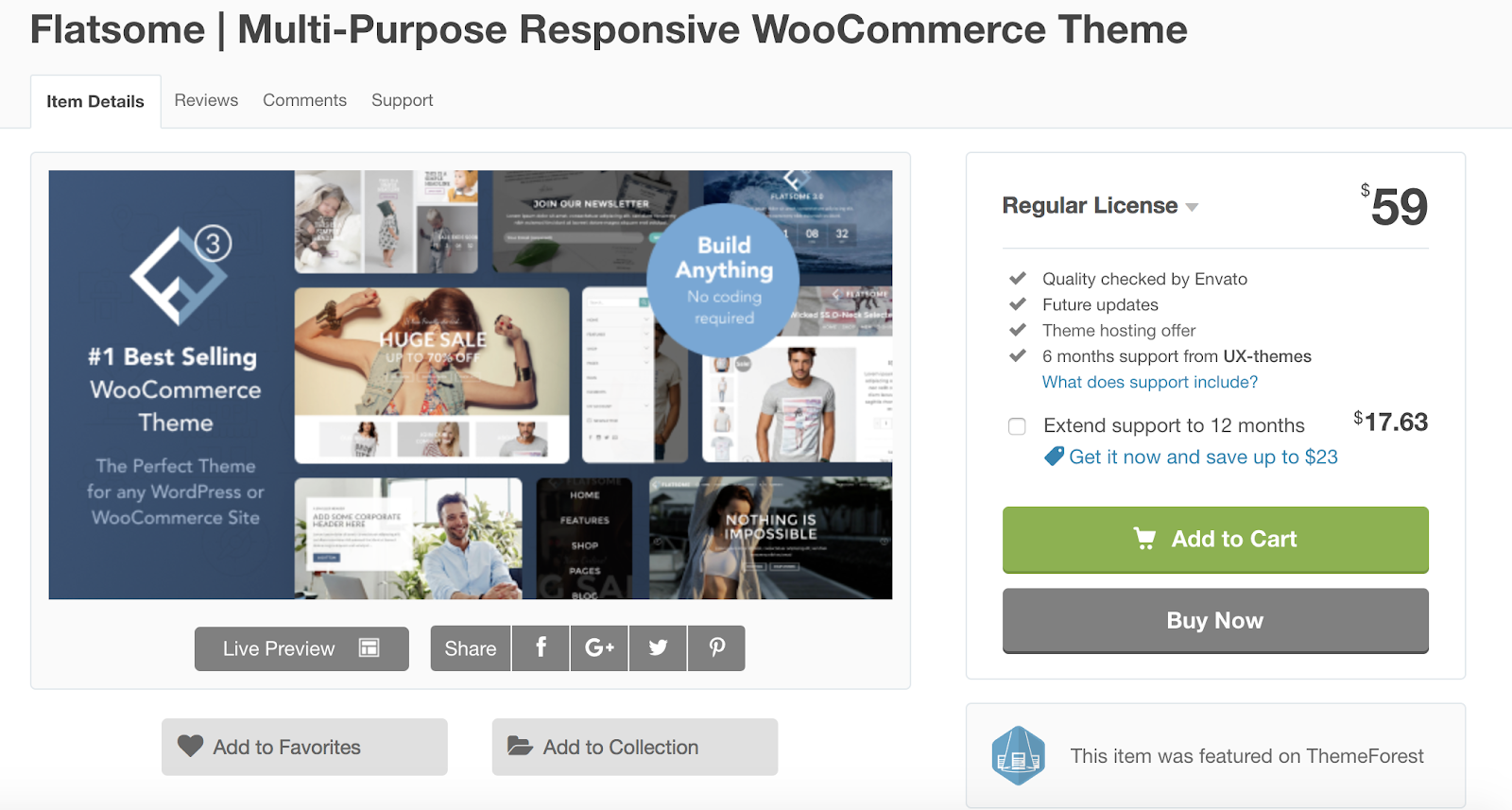
Flatsome is a responsive and multi-purpose WordPress theme with WooCommerce integration for e-commerce businesses. The theme has a custom product page builder so you can easily display and sell your items in a way that makes sense for your business. Flatsome is already translated in more than 12 different languages for those of you looking to sell your products in other countries.

Key Takeaways:

  • Multi-purpose and e-commerce theme
  • Custom product page builder
  • Translated in 12+ languages

5. Impreza

impreza-wordpress-theme

Source

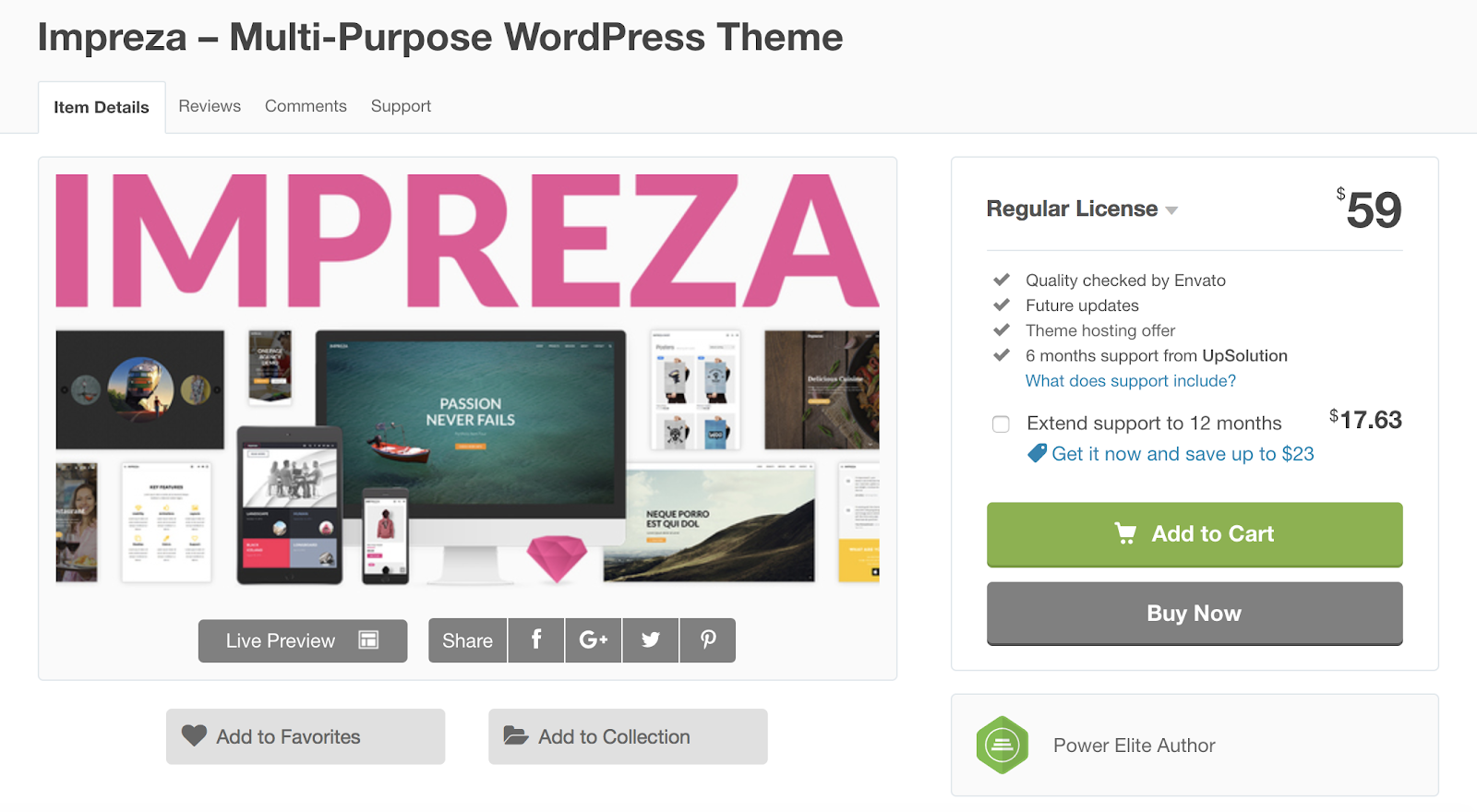
Impreza is a responsive, multi-purpose WordPress theme that offers a number of unique, ready-to-use demos to help you start customizing your website. With Impreza, all of your theme updates are automatic so you’ll never have to worry about managing your own software.

Key Takeaways:

  • Multi-purpose theme
  • Ready-to-use demos available
  • Automatic updates

6. Float

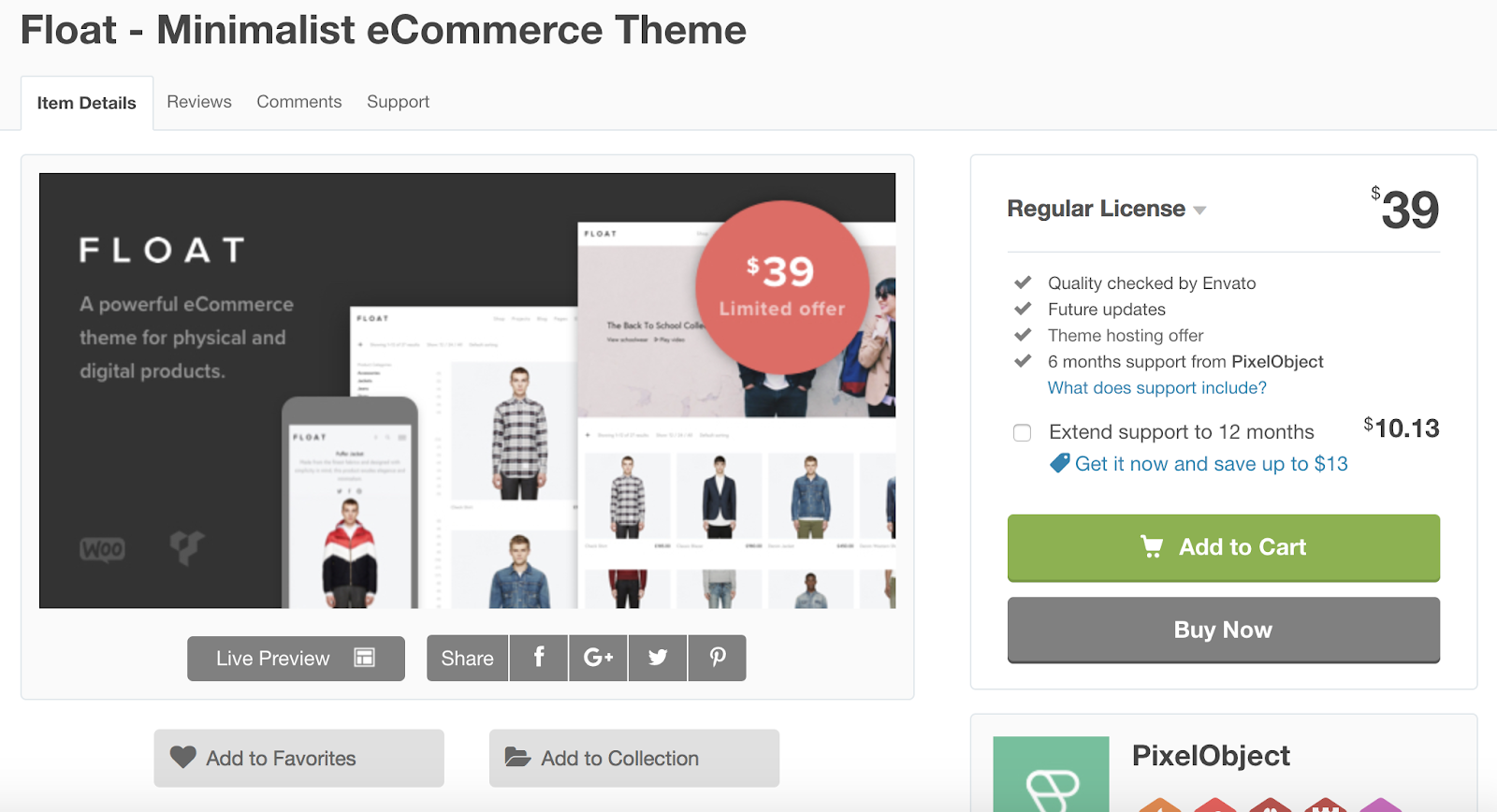
Float is a responsive, simple WordPress theme tailored to e-commerce websites. The theme offers a clean, minimalist design to improve user experience and ease-of-use. The two product page display options — scroll and slider — allow your customers to either scroll up and down or slide right and left to view your products.

Key Takeaways:

  • E-commerce theme
  • Clean, minimalist design
  • Scroll and slider options for product pages

7. One Page

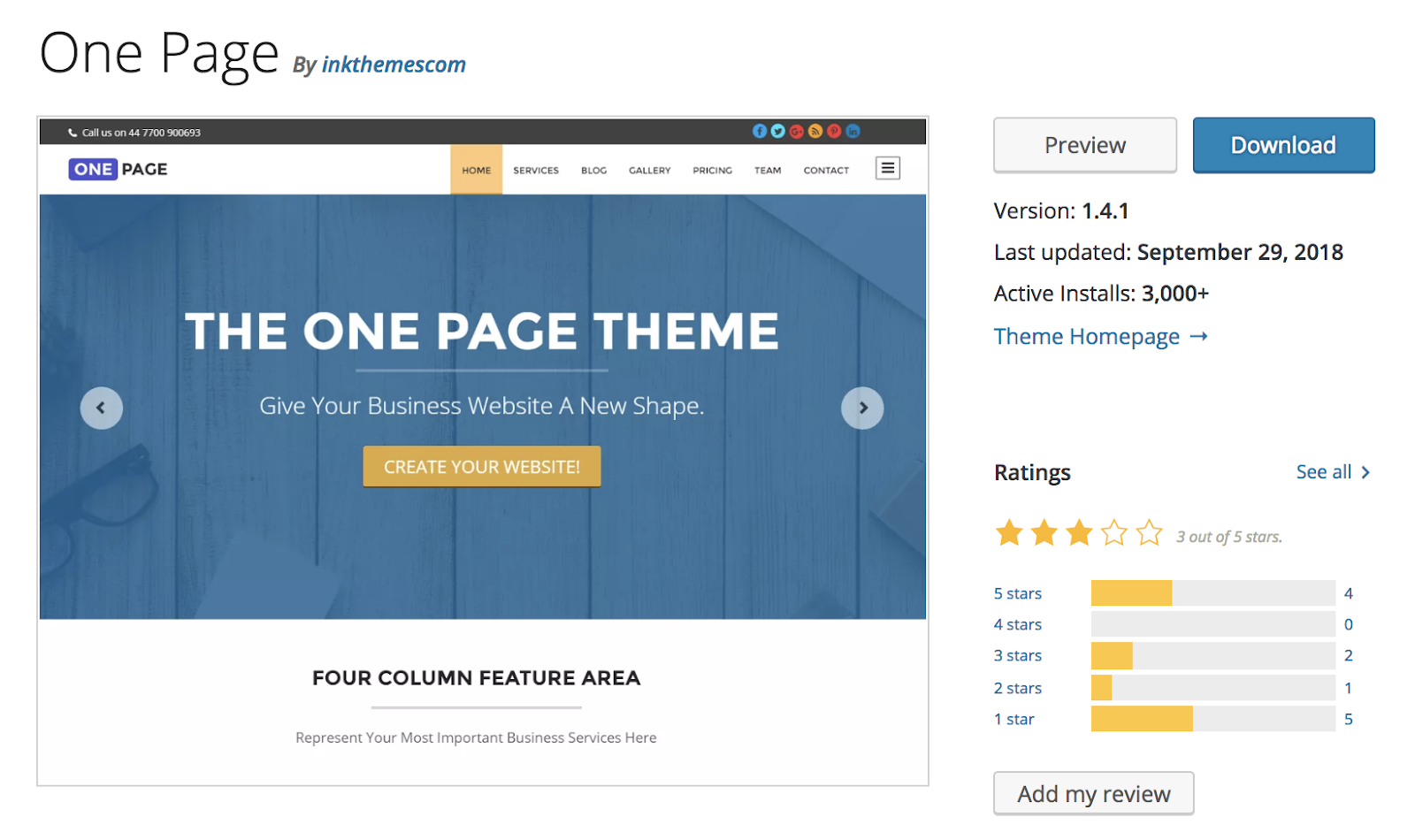
One Page is a single-page WordPress theme, meaning it displays all of your most important website features on your homepage. This might be appealing if you don’t have a ton of content on your website and want to keep it all in one location to improve user experience and efficiency for your visitors. The theme only allows space for your most important business-related information to be listed on your homepage making it minimalist and clutter-free. 

Key Takeaways:

  • Most important business information listed on your homepage
  • Ideal if you don’t want a lot of content on your site
  • Minimalist design

8. Excellent

excellent-wordpress-theme

Source

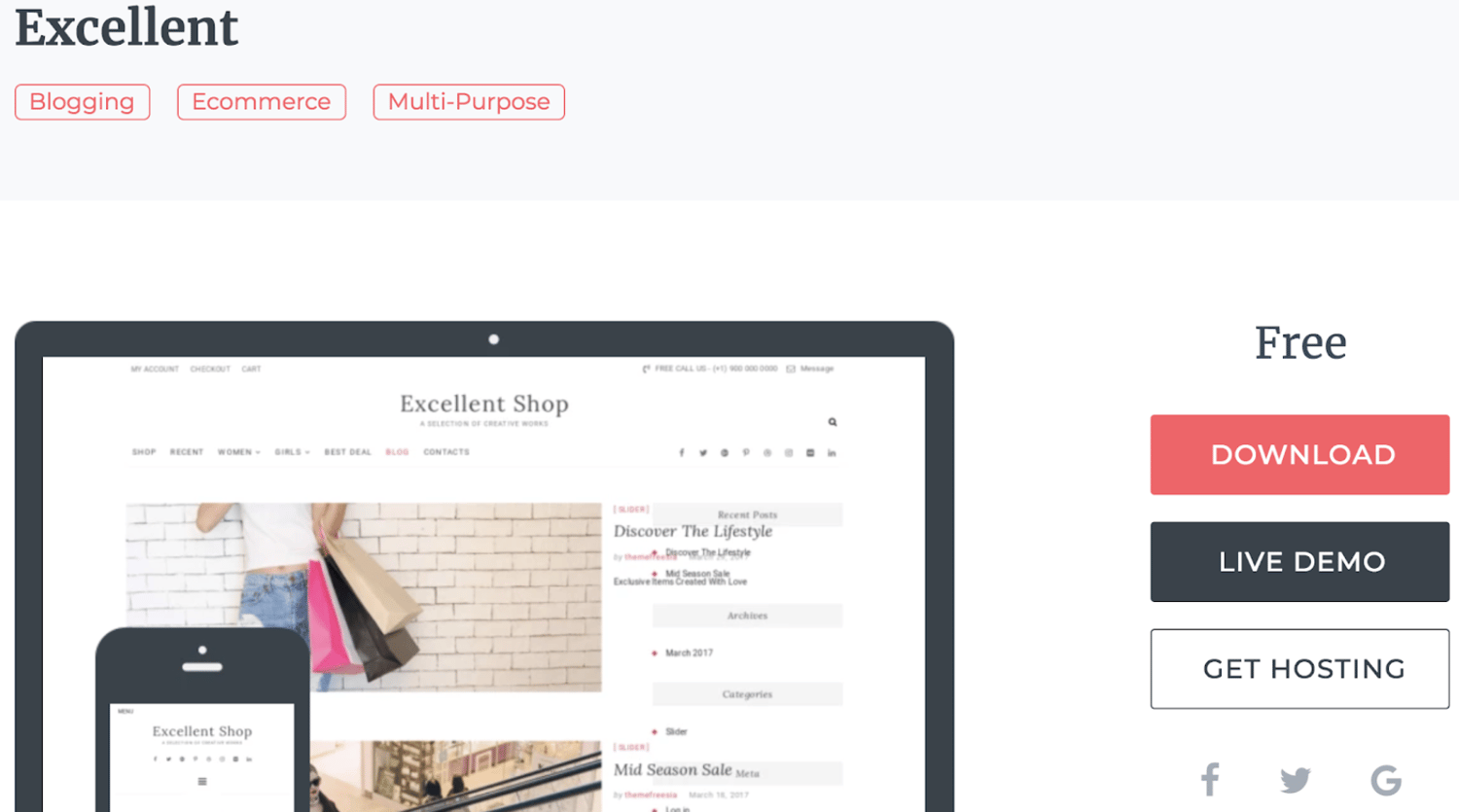
Excellent is a responsive, multi-purpose Wordpress theme focused on businesses and e-commerce sites. With a variety of different sections that you can add and move to suit your business' needs, as well as a wide range of navigation menu options, there are hundreds of ways to customize your company’s website. The theme's WooCommerce integration allows you to simplify the management of your online store and gives you the ability to add sidebars with links to all of your social profiles so your customers can easily view and follow your accounts.

Key Takeaways:

  • Ideal for businesses and e-commerce sites
  • Customizable navigation menus
  • Social media sidebars

9. Mustache

mustache-wordpress-theme

Source

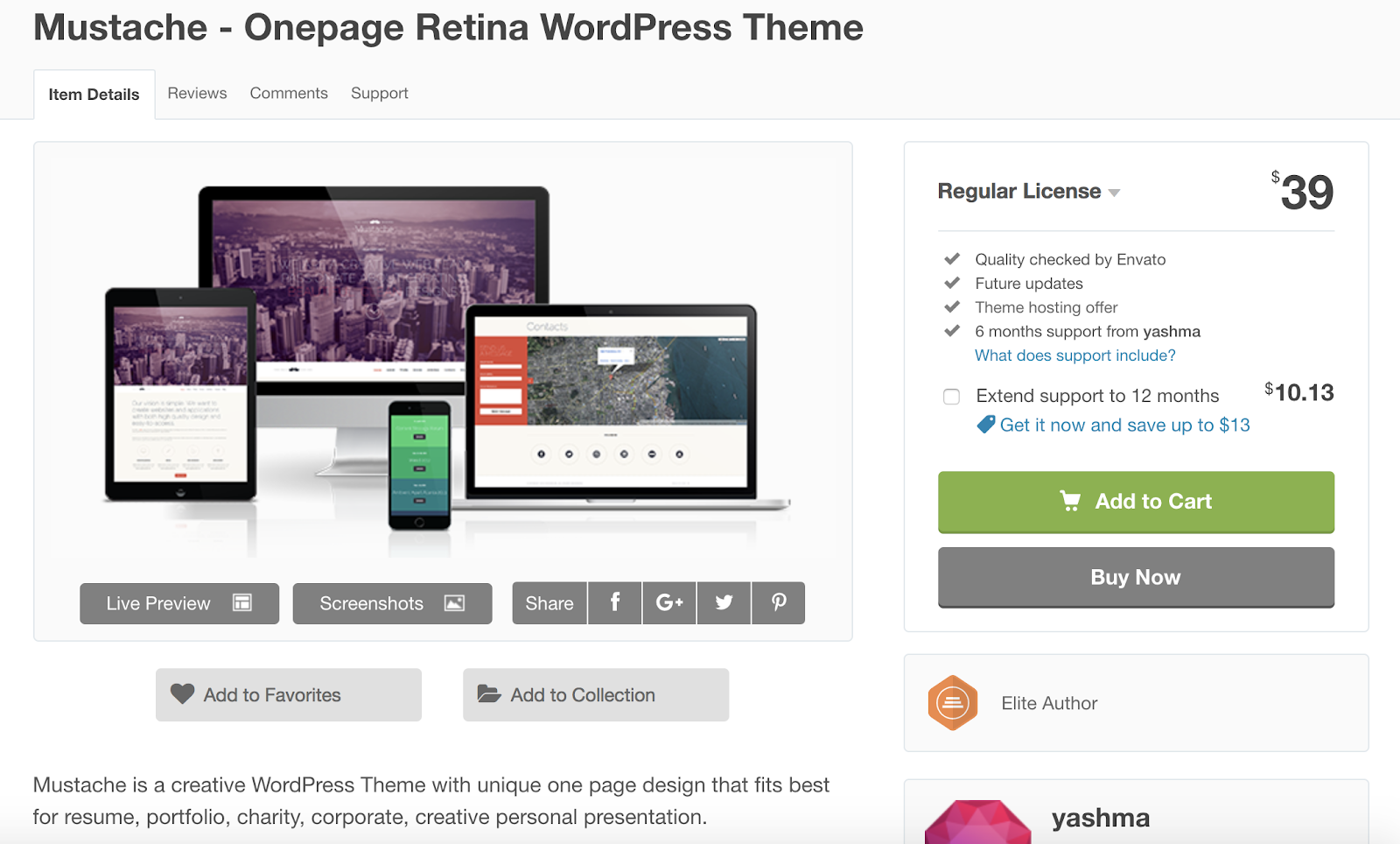
Mustache is a responsive, creative WordPress theme built for sharing artistic work and written content as well as portfolios and presentations. With Mustache, you can easily add the Google Analytics integration so you are able to keep track of your content’s success and manage any needed improvements.

The theme also gives you access to the Google Fonts library which contains thousands of font options for you to choose from and add to your site. For those of you looking to build your portfolio on your WordPress site, Mustache also offers two different portfolio gallery options that you can implement.

Key Takeaways:

  • Creative theme
  • Google Analytics integration
  • Two portfolio gallery options

10. Aesthetic

aesthetic-wordpress-theme

Source

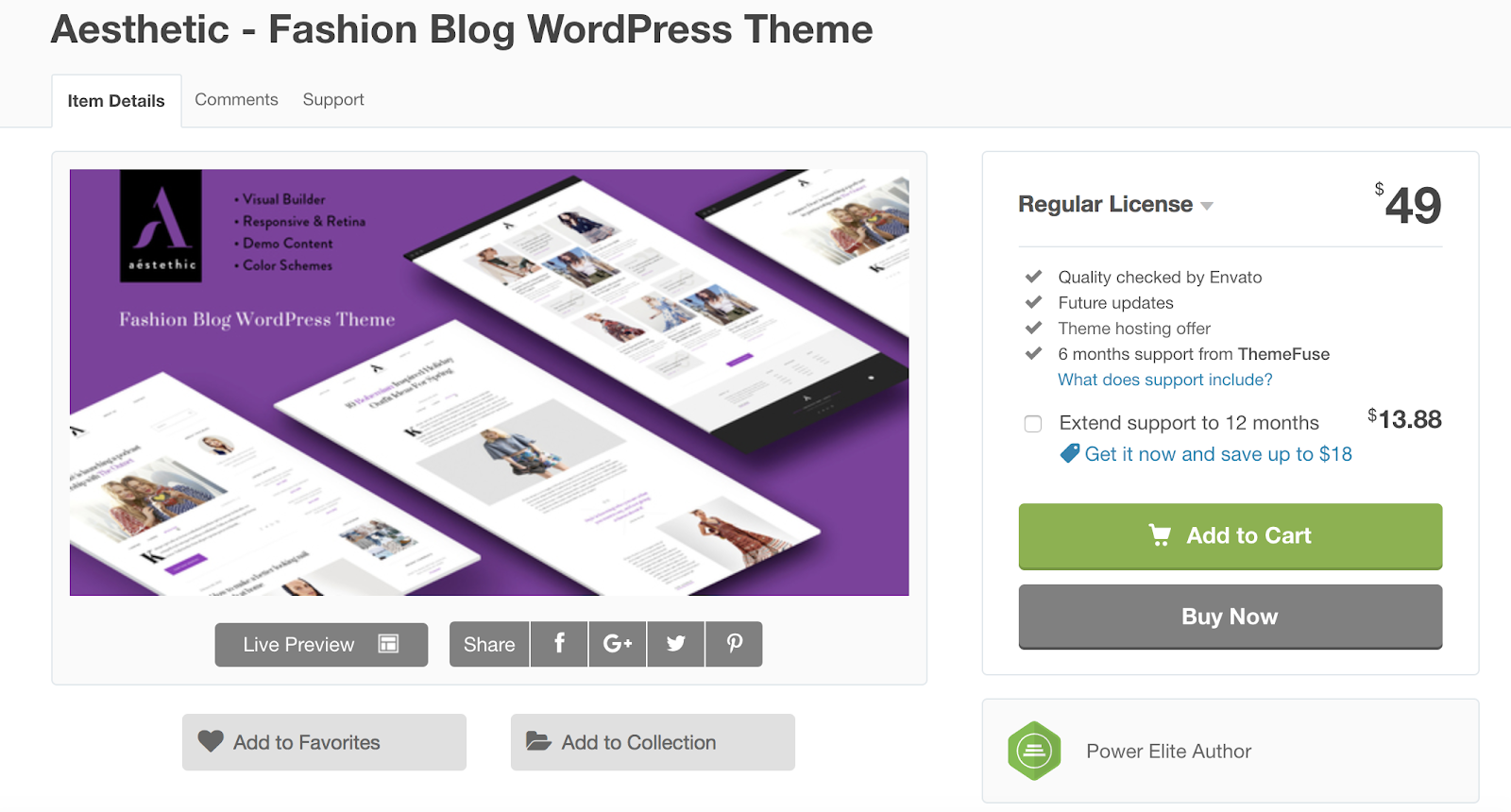
Aesthetic is a responsive WordPress theme built specifically for fashion and lifestyle blogs. The theme includes a minimalist design, the ability to implement a portfolio format with up to four columns, and other customizable features. Aesthetic has a page option ready for donations as well as an option to easily add your own animations to different pages of your website.

Key Takeaways:

  • Built for fashion and lifestyle blogs
  • Donations page included
  • Can easily add your own animations 

11. Exposure

exposure-wordpress-theme

Source

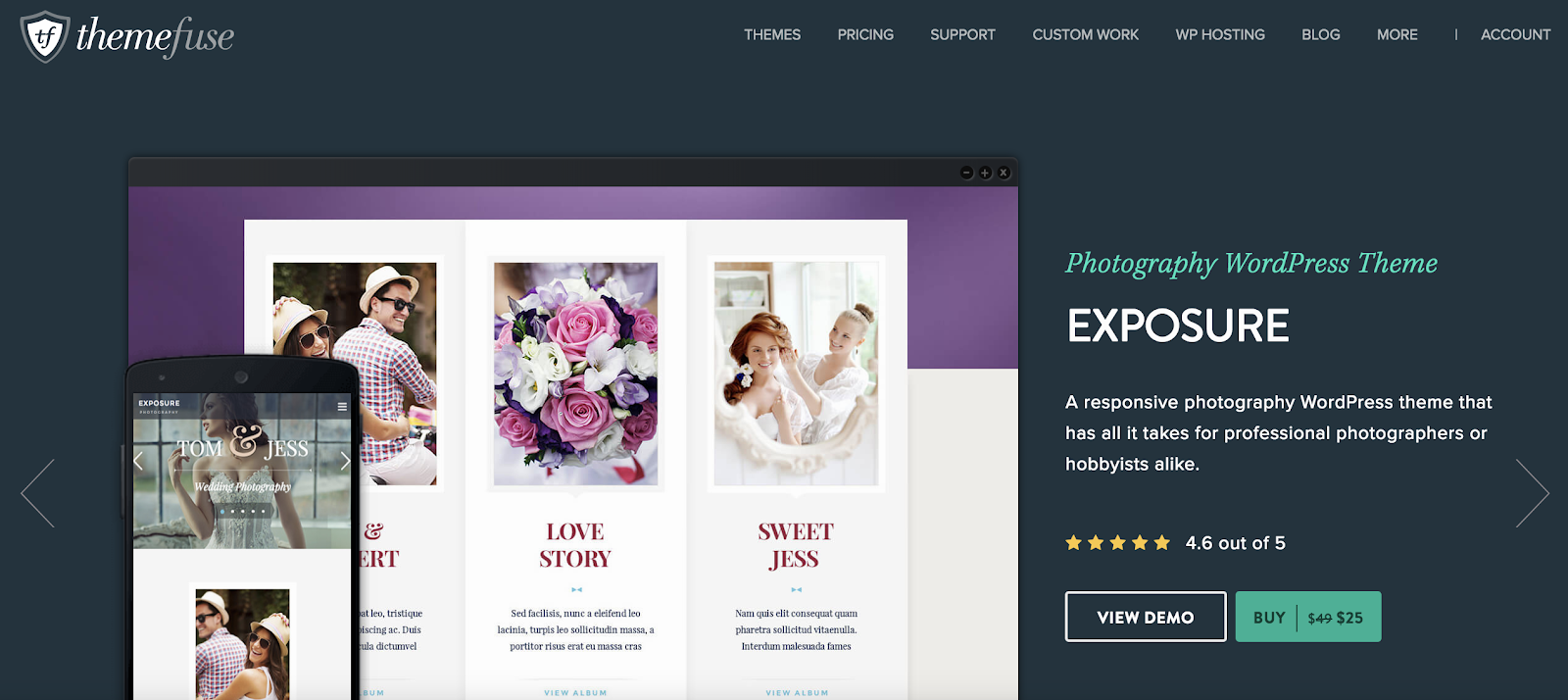
Exposure is a responsive, photography WordPress theme created for artists looking to display their work with a clean and minimalist design. The theme is ideal for all types of photographers — whether it’s your full-time job or your hobby. For those of you who are looking to sell your photos, the theme is integrated with WooCommerce to keep the shopping and buying processes simple for your customers. There is also a contact form module that you can add to one of your site pages so your visitors can reach out to you with any questions or concerns.

Side note: For those of you considering other themes that may not come with a contact form module, HubSpot’s WordPress Contact Form plugin is a tool that you can easily install and add to your own site so your visitors can efficiently get in touch with you.

Key Takeaways:

  • Photography theme
  • WooCommerce integration
  • Contact form module

12. SuperMag

supermag-wordpress-theme

Source

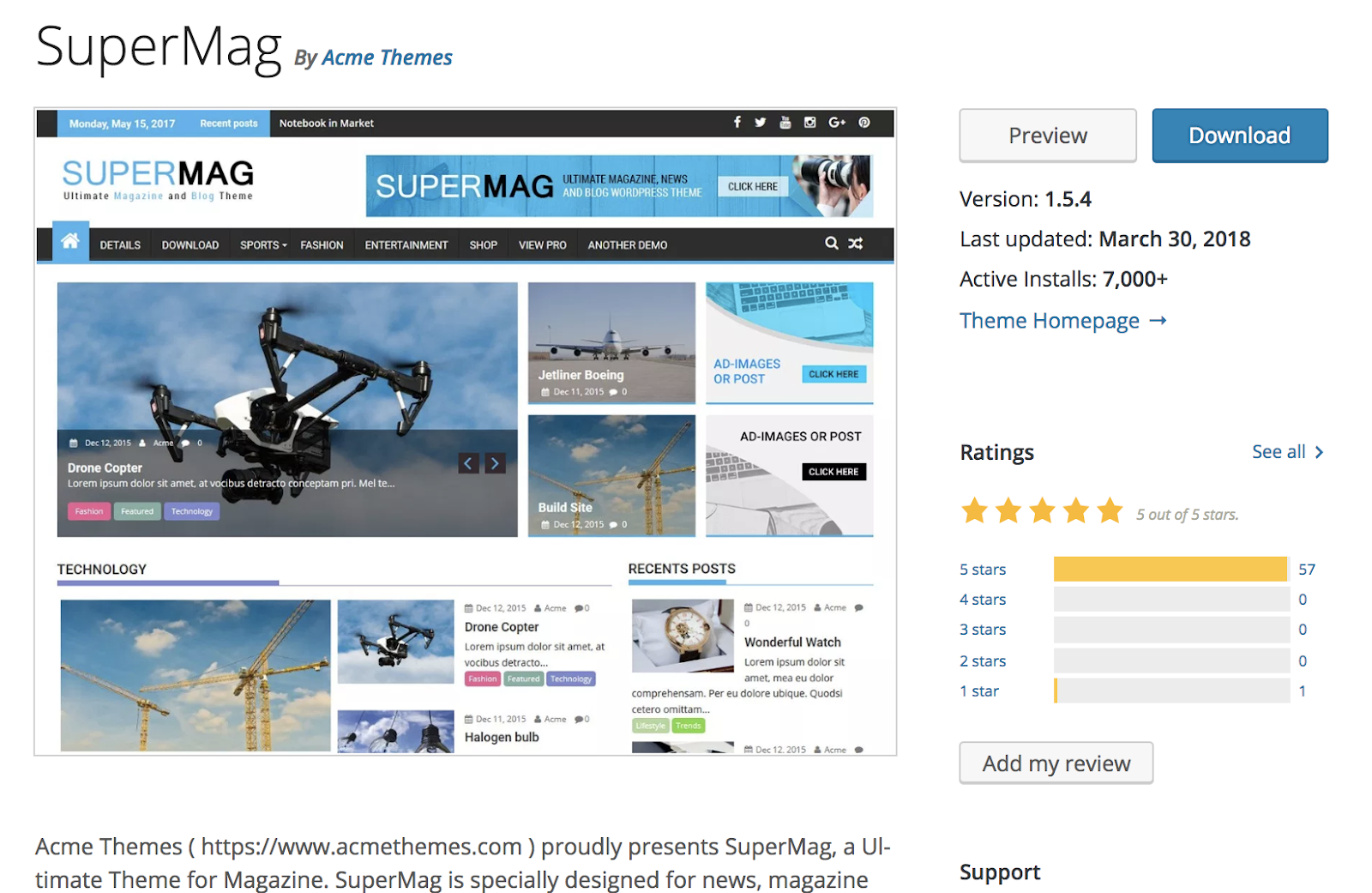
SuperMag is a responsive WordPress theme created for digital magazines. The theme’s magazine-style design features a variety of ways to display photographs, videos, and written content. SuperMag is advertisement-ready so you can easily add your chosen ads to your site pages. There is also an option to enable a “breaking news” page or section for your site if you feel it’s vital for all of your visitors to know about a specific change or event.

Key Takeaways:

  • Ideal for digital magazines
  • Advertisement-ready
  • Option to include “breaking news” page or section 

13. Fagri

fagri-wordpress-theme

Source

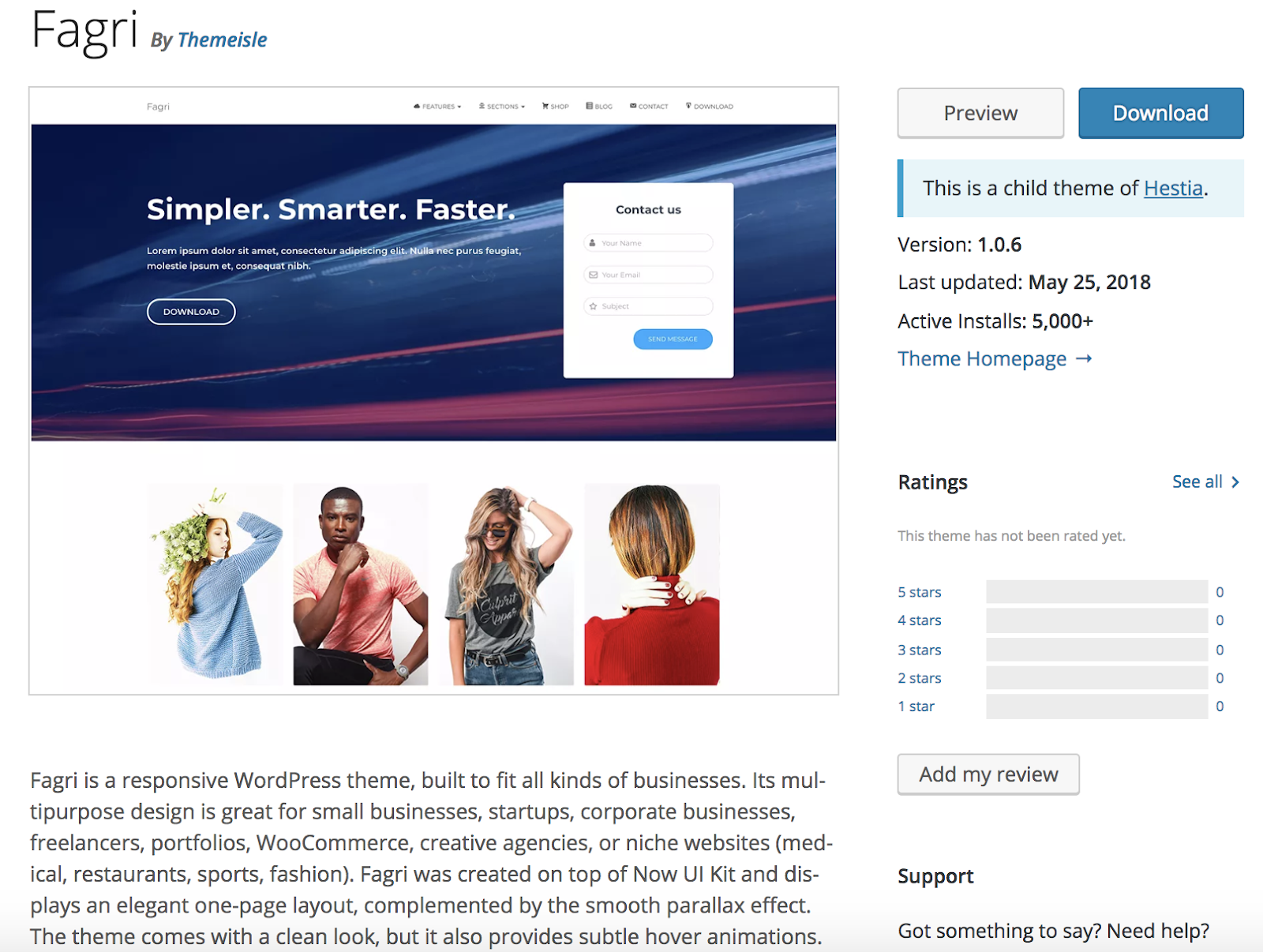
Fagri is a responsive, multi-purpose WordPress theme built for a wide range of businesses due to its flexible design and large number of customizable features. The theme comes with newsletter integration so you can easily send your email list information about your latest developments, new products, sales, and more. Fagri is SEO-ready so your site is more likely to organically rank on search engines such as Google.

Key Takeaways:

  • Multi-purpose theme
  • Newsletter integration
  • SEO-ready 

14. Tiny Hestia

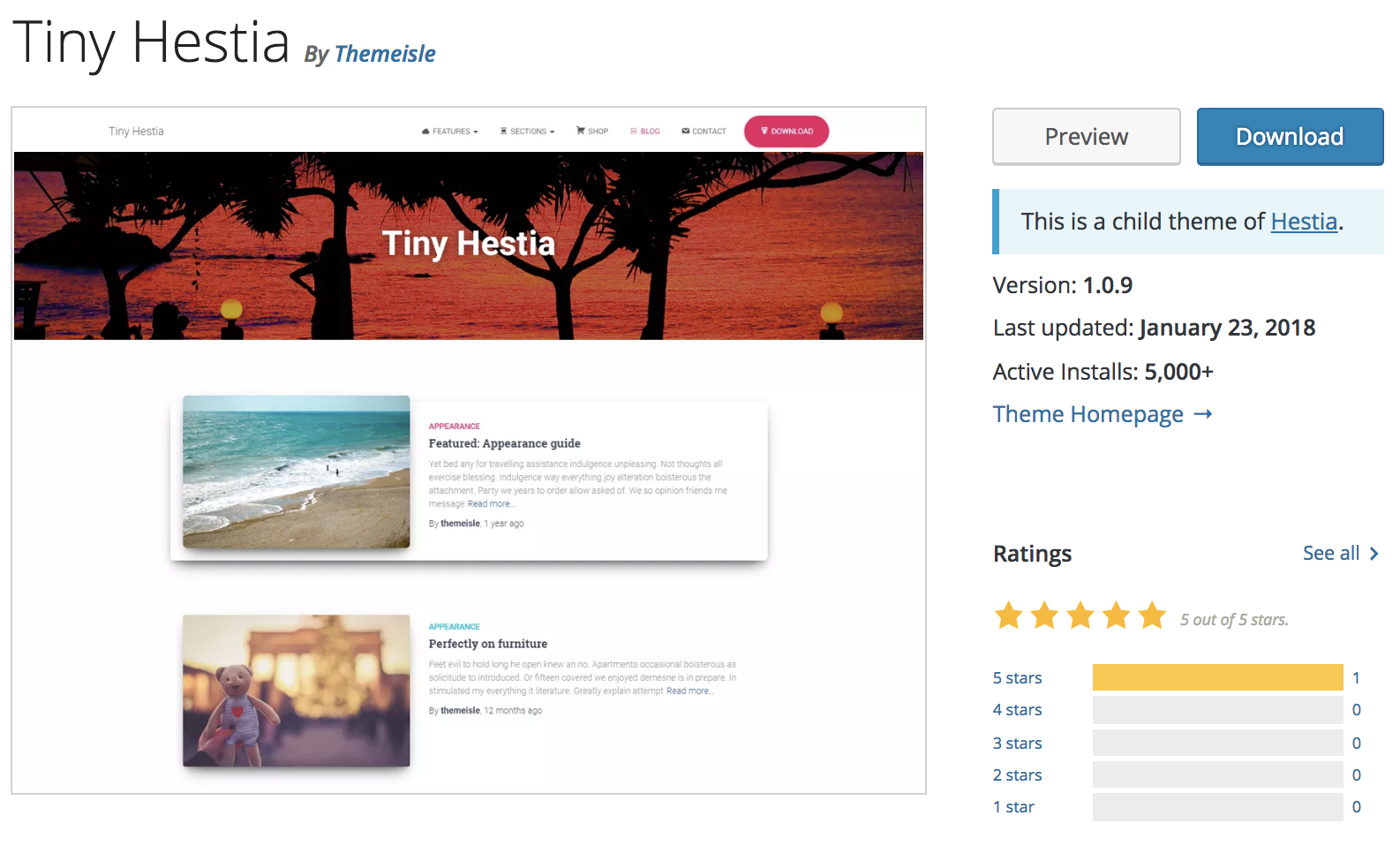
Tiny Hestia is a responsive WordPress theme for bloggers. The theme has a minimalist design so your visitors can easily navigate your site and focus on your content. Tiny Hestia is a child theme of Hestiachild themes allow you to modify your current theme to enhance functionality. So, if you are already a Hestia user and want to customize the theme to make it better suited for sharing blog content, you can install Tiny Hestia. When you install a child theme like Tiny Hestia, you don't lose your ability to update the theme or lose any of your original content.

Key Takeaways:

  • Created for bloggers
  • Minimalist design
  • Child theme of Hestia 

15. Bordeaux

bordeaux-wordpress-theme

Source

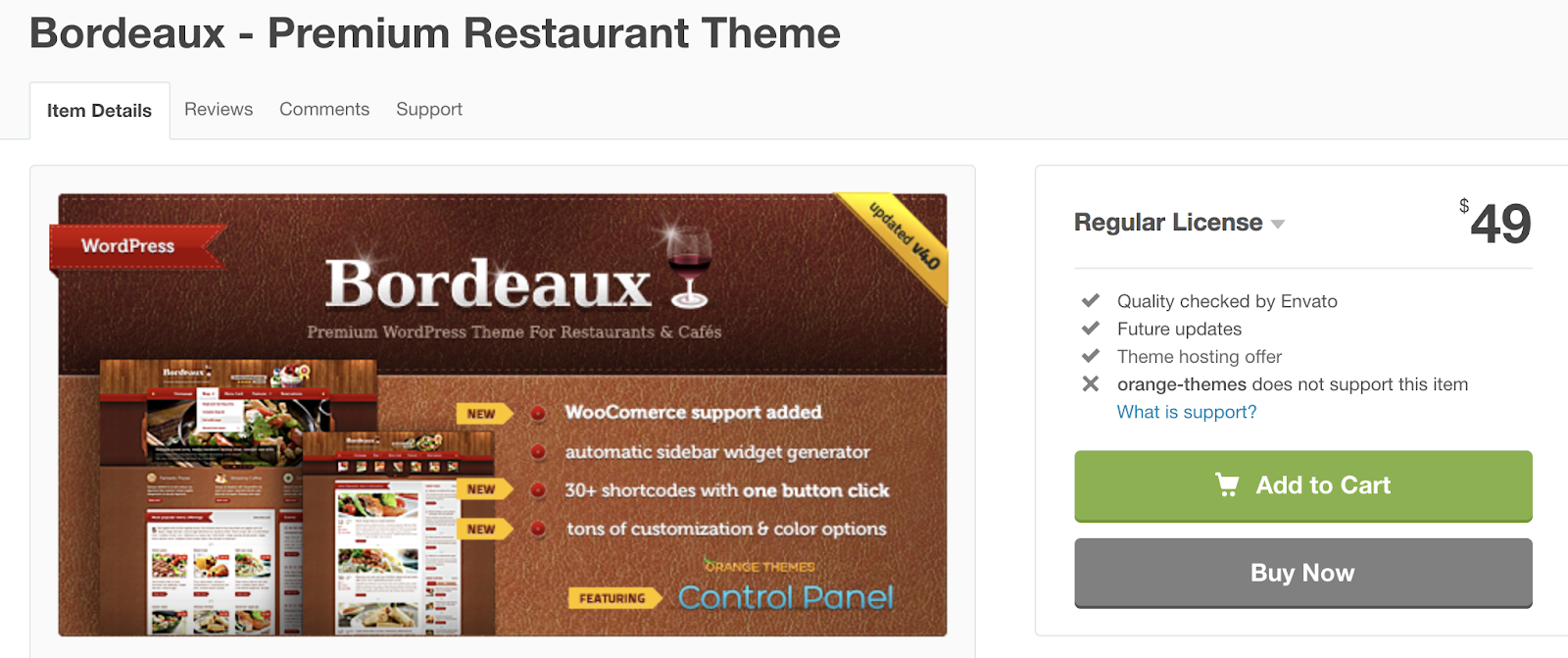
If you’re in the restaurant business and looking for a responsive theme, Bordeaux might be a great option for you. The theme has customizable features fit for restaurants, cafes, and bakeries, and includes a reservation system so you don’t need to find a separate plugin or software to manage your tables. The theme’s homepage has three customizable information blocks including a menu card, items for sale, and latest restaurant news.

Key Takeaways:

  • Restaurant theme
  • Table reservation system includes
  • Homepage includes three customizable information sections

Back To You

Today, responsive website themes are a necessity — your WordPress website visitors and customers are browsing your content and purchasing your items on a variety of different devices at all times. That’s why you want to ensure they have a consistent and positive experience on all types of devices.

So, try installing a responsive WordPress theme to create a seamless transition for your website visitors no matter the device they’re on — and if the 15 options we’ve described aren’t of interest to you, you can always review the WordPress theme library for more choices tailored to your specific needs. Just remember to review the feature lists to ensure the themes in question include a responsive design.

Learn SEO in HubSpot Academy

from Marketing https://blog.hubspot.com/marketing/responsive-wordpress-themes

The Ultimate Guide to Google Forms

Whether you're collecting customer feedback or applications for a job opening, Google Forms is undoubtedly one of the best free form tools at your disposal.

Google Forms integrates seamlessly with other Google products, such as Sheets, allowing you to make sense of all that data you collect. Additionally, it works well with other platforms like YouTube, enabling you to upload videos without leaving the tool.

Want 5 free customer satisfaction survey templates you can implement immediately? Click here.

However, if you're new to Google Forms or want to undertake a more challenging task than you're used to within Forms, you might feel overwhelmed and unsure how to get started.

Here, we're going to explore all of Google Forms' features, tools, and functions to ensure you're prepared to make any form you need within minutes.

To start, let's take a look at the templates Forms has to offer.

Google Forms Templates

Here are a few of the templates you'll likely use most often, separated by category.

To find these templates in your Google Forms, go to your email and click Forms in the drop-down menu (if you don't see it, click "More" at the bottom).

Then, click the up and down arrow beside Template Gallery. This will show you all your template options.

For leads, try these templates:

  • Contact Information
  • Event Registration

To collect customer feedback, try these templates:

  • Event Feedback
  • Customer Feedback

For customer payment, try these templates:

  • Order Form

For internal employees, try these templates:

  • Job Application
  • Time Off Request
  • Find a Time

It's important to note, you can also create a blank form, or use one of the above templates for multiple purposes. "Find a Time", for instance, allows you to figure out when your team is available to meet, but you might also send it to a client to find a meeting time that works for you both.

Next, let's take a look at some exceptional Google Forms examples for further inspiration.

Google Forms Examples

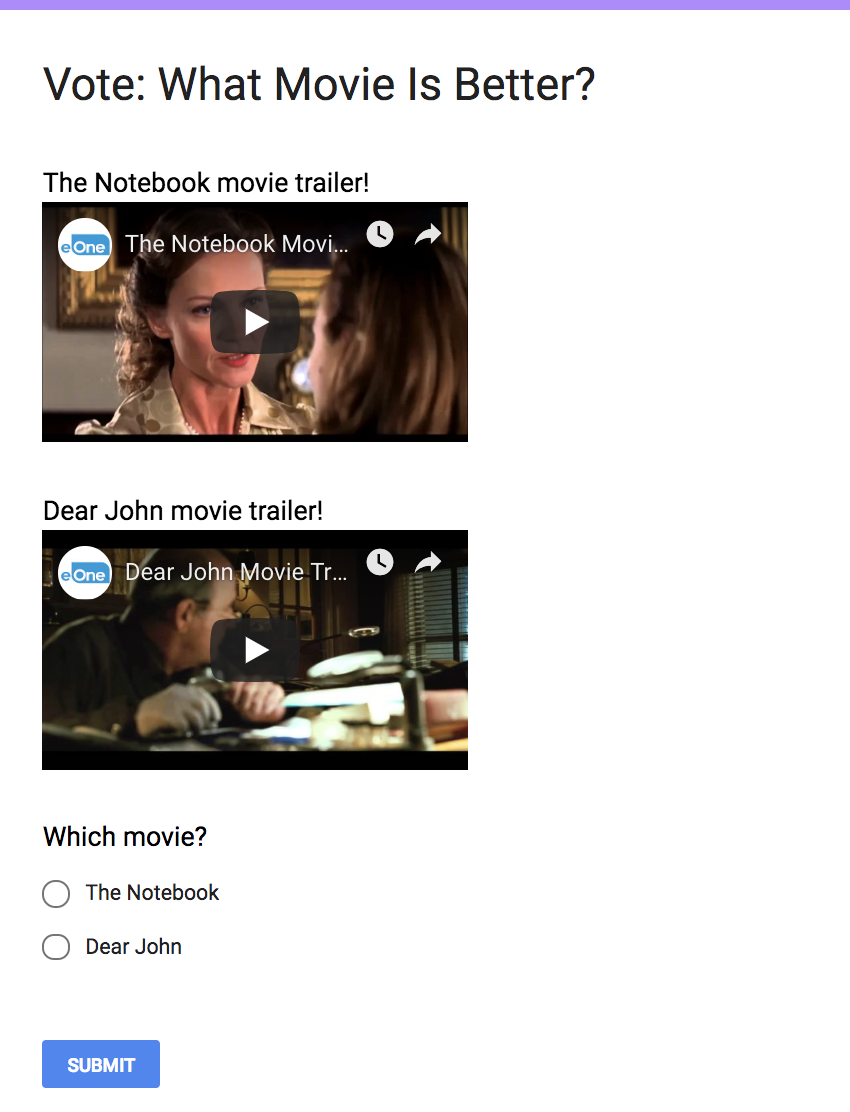
Google Forms is incredibly easy and intuitive, once you get the hang of it. Within each template, you have the option to add questions, a title and description, an image, a video, or even an entire section.

Additionally, Forms integrates well with other platforms -- for instance, to embed a video, you can search YouTube videos from within your Form. You can also upload or search for an image without having to leave Forms.

Here are a few initial Google Form examples, to get you started:

1. For an in-house seminar or conference (using the RSVP form):

2. For a job application (using the Job Application form):

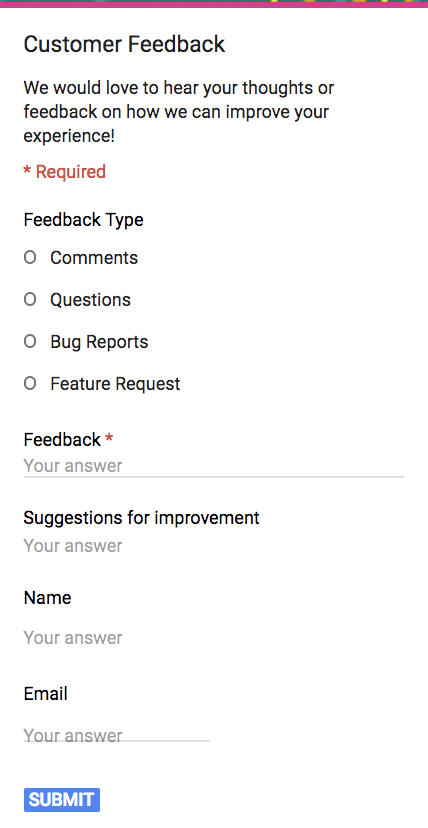
3. For customer feedback (using the Customer Feedback form):

4. To create a quiz (using the Quizzes form):

How to Embed a Google Form in an Email

While you can technically embed a Google Form directly in an email (by copying the embed link straight from the form and pasting it in an email), you probably don't want to -- simply sending your form to email addresses you provide looks cleaner.

For instance, when I send a form to myself, here's how it appears in my inbox:

The email comes with a nifty "Fill Out Form" button. When I click it, I'm automatically taken to your form.

However, if instead you want to embed your form into a landing page or blog post, follow these instructions:

1. Click the "Send" button at the top of your form.

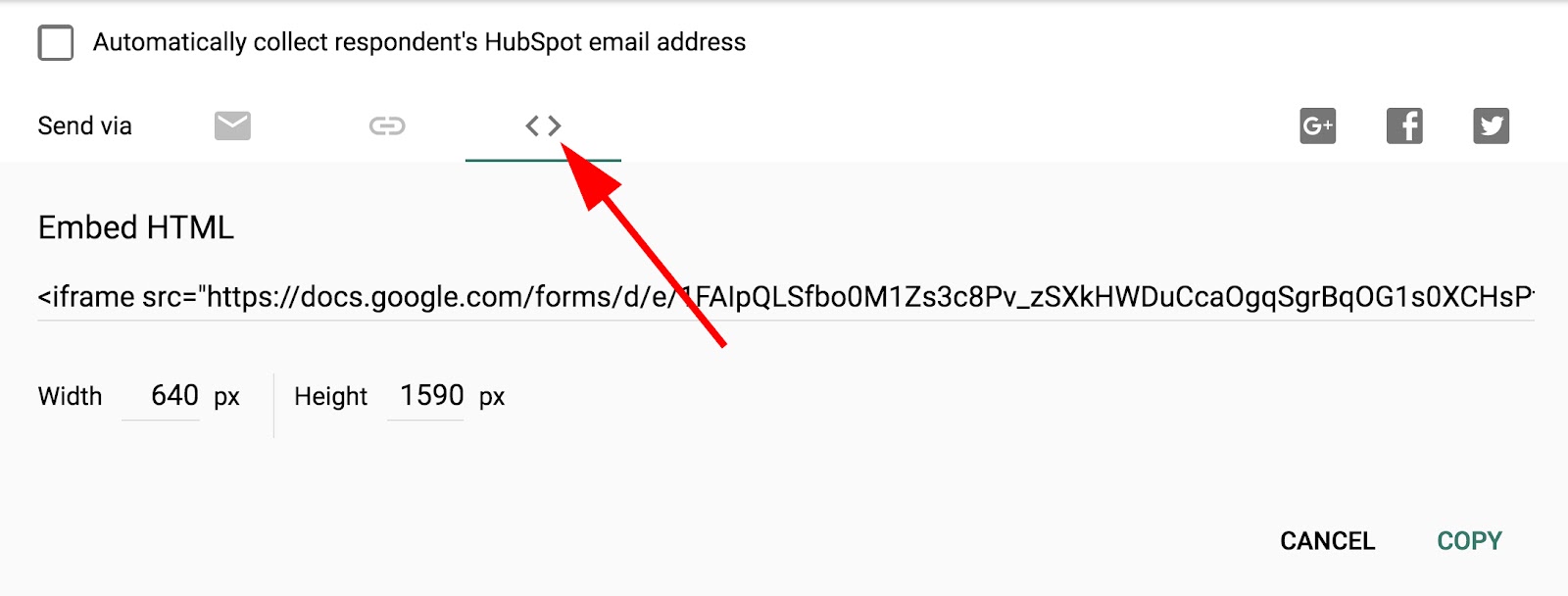
2. When this box pops up, select the "< >" embed link.

3. Click "Copy" in the bottom right. Then, paste the embed HTML link into the code of a blog post or website page.

How to Close a Google Form

If you're done with a form and want to close it, follow these three easy steps:

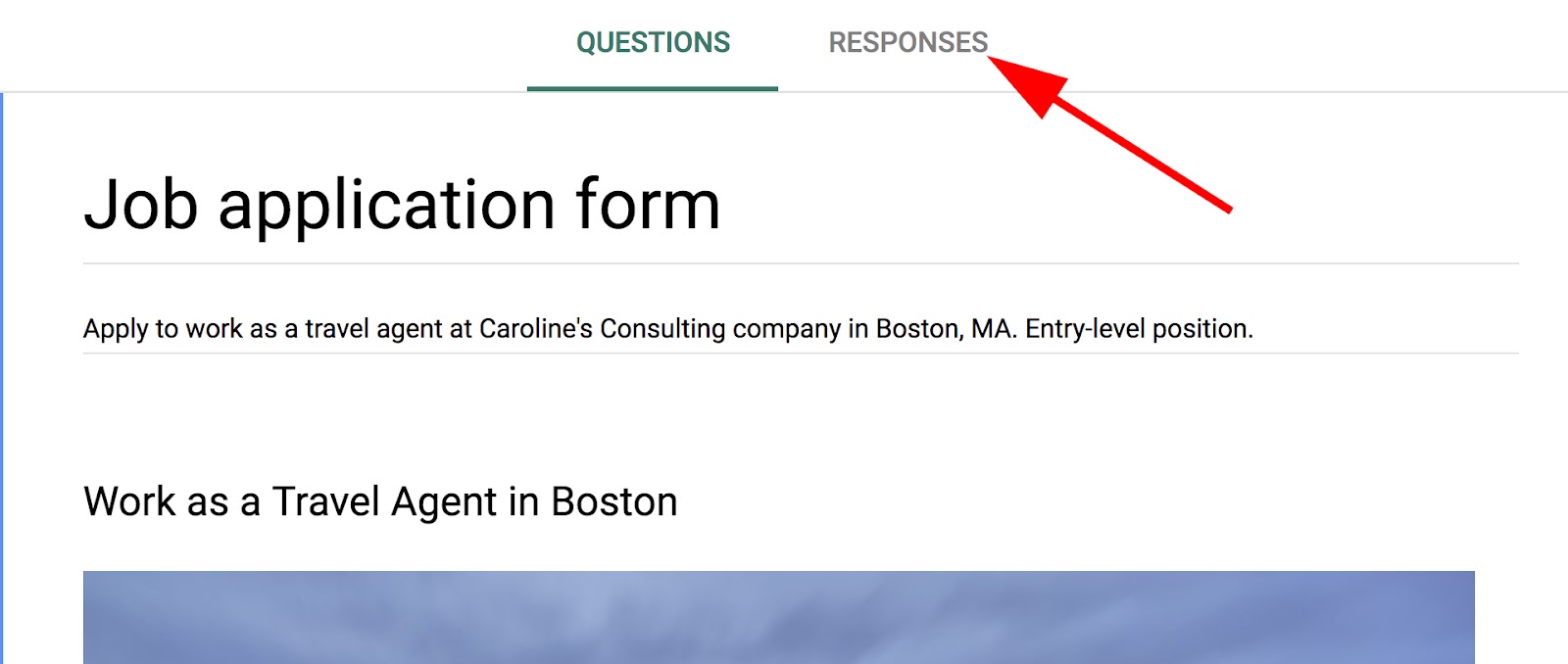
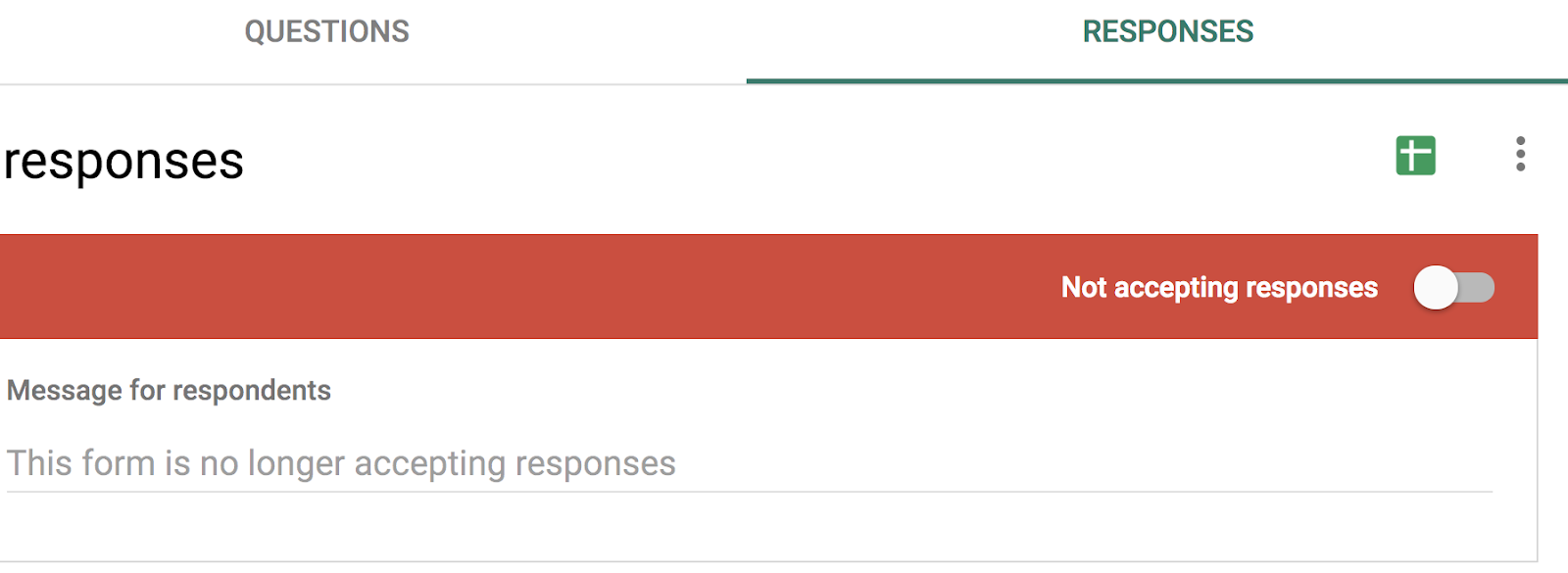
1. Click "Edit This Form" on the form you want to close. Then, select "Responses".

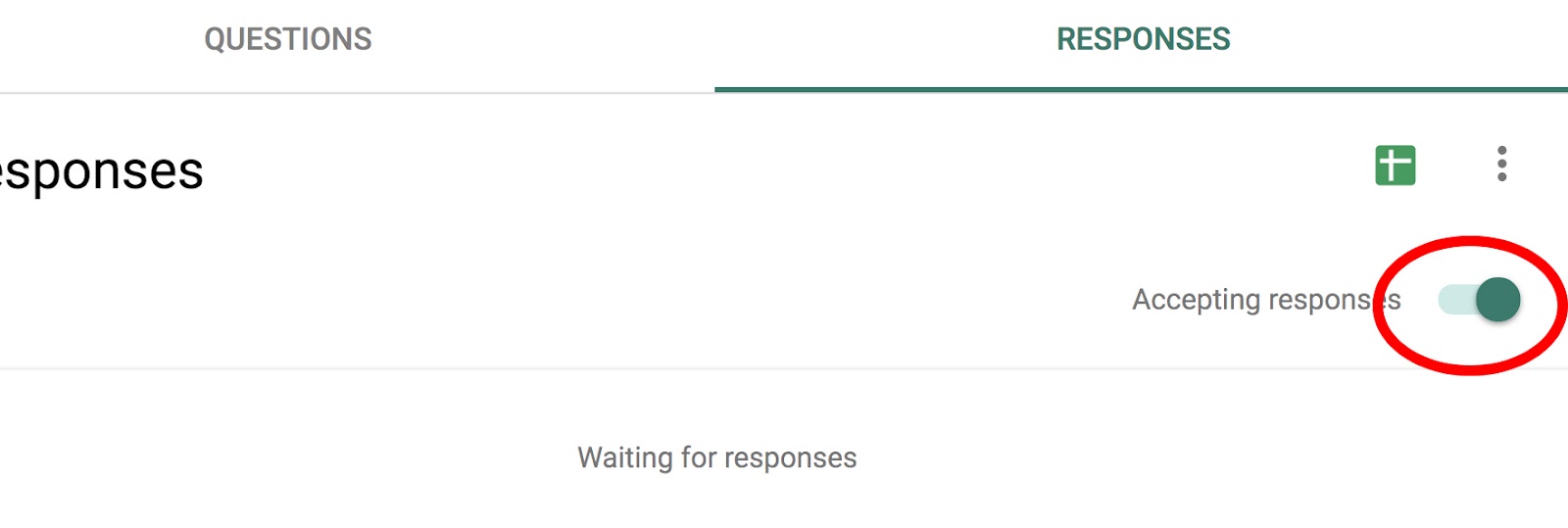
2. Click the button to the right of "Accepting responses".

3. Once it says "Not accepting responses", your form is now successfully closed.

 
Service Hub


from Marketing https://blog.hubspot.com/marketing/google-forms

5 Impressive Resume Objective Examples to Help You Craft Your Own

With only six seconds to grab a recruiter’s attention, conventional wisdom might tell you to cut right to the chase when you write your resume. A lot of people say a resume objective just waste precious space. But if you craft it in a way that highlights your qualifications, skills, and fit for a role, an objective can actually enhance your resume by giving recruiters a sneak peek of your background that prompts them to keep reading. 

How to Write a Resume Objective

When recruiters read your resume, they want to know three things about you:

  • Are you qualified for this job?
  • Have you made an impact on your company in your current or previous roles?
  • How will you make an impact on our company in this specific role?

If you can give them a clear and concise preview of these three answers within the first few lines of your resume, they’ll start thinking about your potential as an employee at their company. This’ll also give them a positive first impression of you and make them read the rest of your resume to confirm that you’re their best-fit candidate.

To show you how to craft a compelling resume objective at any stage of your career, we’ve provided five resume objective examples that anyone from a recent graduate to a proven professional can use. We’ll also break down the structure of each resume objective to give you a more concrete understanding of writing a gripping resume objective.

Resume Objective Examples

The Recent Graduate

Recent double major in English and Economics from Pomona College who has completed four content marketing internships in the MarTech space. Used creative and analytical skills to craft compelling content and refine content marketing strategies. Seeking a position as a Junior Growth Marketer to help HubSpot scale freemium marketing efforts and boost free product signups.

Structure:

Are you qualified for this job?

Recent double major in English and Economics from Pomona College who has completed four content marketing internships in the MarTech space.”

How have you made an impact during your current or previous roles?

Used creative and analytical skills to craft compelling content and refine content marketing strategies.”

How will you make an impact on our company in this specific role?

Seeking a position as a Junior Growth Marketer to help HubSpot scale freemium marketing efforts and boost free product signups.”

The Ambitious Entry-Level Worker

Ambitious associate marketing manager with two years of experience strategizing and executing lead generation campaigns. Spearhead Sigstr’s co-marketing program and drove a 25% increase in program leads last year. Seeking a position as Marketing Manager of the Lead Optimization team at HubSpot to optimize blog lead generation strategy.

Structure:

Are you qualified for this job?

Ambitious associate marketing manager with two years of experience strategizing and executing lead generation campaigns.”

How have you made an impact during your current or previous roles?

Spearhead Sigstr’s co-marketing program and drove a 25% increase in program leads last year.”

How will you make an impact on our company in this specific role?

Seeking a position as Marketing Manager of the Lead Optimization team at HubSpot to optimize blog lead generation strategy.”

The Career Switcher

Experienced journalist considering a career switch to content marketing. Spent five years digging up and breaking stories about business and technology for The Boston Globe. Hoping to apply my grasp of journalism and storytelling as a Staff Writer to strengthen HubSpot’s thought leadership in the MarTech space.

Structure:

Are you qualified for this job?

Experienced journalist set on making a career switch to content marketing.”

How have you made an impact during your current or previous roles?

Spent five years digging up and breaking stories about business and technology for The Boston Globe.”

How will you make an impact on our company in this specific role?

Hoping to apply my grasp of journalism and storytelling as a Staff Writer to strengthen HubSpot’s thought leadership in the MarTech space.”

The Middle Manager Who Wants to Make it to the Top

Savvy marketing manager with five years of experience crafting social media videos, developing social video strategy, and optimizing social media advertising strategy. Lead Sprout Social’s social analytics team and doubled video views and cut CPM costs by 40% this year. Looking to join HubSpot as Director of Buzz to develop an overarching social media strategy that boosts views, engagement, and cuts costs.

Structure:

Are you qualified for this job?

Savvy marketing manager with seven years of experience crafting social media videos, developing social video strategy, and optimizing social media advertising strategy.”

How have you made an impact during your current or previous roles?

Lead Sprout Social’s social analytics team and doubled video views and cut CPM costs by 40% this year.

How will you make an impact on our company in this specific role?

Looking to join HubSpot as Director of Buzz to develop an overarching social media strategy that boosts views, engagement, and cuts costs.”

The Proven Professional

Seasoned business operations and analytics veteran with an MBA and ten years of experience leading high-performing sales operations, marketing analytics, and business intelligence teams at Salesforce, Adobe, and Domo. Seeking to utilize my proven analytical, technical, and professional expertise to leverage data and drive crucial business decisions at HubSpot as Vice President of Business Intelligence.

Structure:

Are you qualified for this job?/How have you made an impact during your current or previous roles?

Seasoned business operations and analytics veteran with an MBA and ten years of experience leading high-performing sales operations, marketing analytics, and business intelligence teams at Salesforce, Adobe, and Domo.”

How will you make an impact on our company in this specific role?

Seeking to utilize my proven analytical, technical, and professional expertise to leverage data and drive crucial business decisions at HubSpot as Vice President of Business Intelligence.


from Marketing https://blog.hubspot.com/marketing/resume-objective-examples

5 ways emails can boost your marketing efforts

There are a lot of new digital marketing instruments that you can use today, including social media and videos, but that doesn’t make email and email marketing campaigns any less effective.

Email may be the oldest trick in the book, but it is a trick that continues to produce great return on investment, or ROI. This is also the reason why emails are inseparable from today’s best digital marketing campaigns.

Aside from using emails to send out newsletters, there are more ways to integrate email with your marketing efforts. If you are interested in boosting your marketing campaigns using email, here are some of the ideas that are worth exploring.

Timely Transactional Emails

You cannot underestimate the capabilities of transactional emails. They are extremely credible and can be highly engaging when used correctly. Sending an email to confirm a completed account registration or a successful payment is how you strengthen your relationship with the customers.

Transactional emails are usually automated. You can use a good email API to fully automate transactional emails using known triggers such as account registration and checkout. SendinBlue, for example, can integrate its email marketing platform with triggers coming from your ecommerce site.

The automation, however, doesn’t mean you cannot personalize transactional emails further. In fact, you can, and you should. By personalizing the content of transactional emails using variables and custom content, you generate more credibility and boost customer engagement at the same time.

Deliver Clear Benefits

Email marketing is about delivering value to the recipients (potential customers) and there are more ways to do that than ever before. Aside from quality content and a strong call to action, you can also use visuals and other elements to really bring value to the customers.

PayPal’s email marketing campaign is a good example of how simple tweaks to the email content can help increase the value of the emails themselves. Rather than directing users to a tutorial page, PayPal includes a simple and highly visual 3-step tutorial when promoting its Send Money feature.

You can use the same approach to send short tutorials on how to maximize the use of your products to customers who just made a purchase. Time the email for 1 to 2 days after the purchase to create the biggest impact. It is a simple strategy to implement, but it’s a strategy that works.

Add Animation

Animations are not only great for websites and videos; they can now be added to your emails as well, and they create a big impact. The animations don’t have to be particularly big or overwhelming either.

Small animations can direct attention to certain parts of the email that you want customers or recipients to focus on. A special discount hidden behind a layer of animated window, for instance, can make that discount more prominent and attention-grabbing.

The subtle way animation can capture attention is also handy for making the entire email content more personal. Since you can also use GIFs in emails, it is not difficult to create email marketing content that takes user engagement to a whole new level.

Data-Driven Emails

We discussed how you can use transactional emails before. There are triggers that today’s email marketing systems can use to automate the sending of emails to customers. Now, it is time to take it a step further and use data to really personalize your email marketing campaign.

The more you know about the recipients, the more personalized the emails you send them will be. When sending emails to customers who did not renew their membership, for instance, you can tailor the content of those emails based on the features or services recipients use the most.

The same can be said for retargeting and remarketing emails. Instead of using a template, use data you already have to really customize the content of those emails. You will end up with higher conversion rates and better ROI with this simple approach.

Make It Responsive

Last but certainly not least, it is now possible to design graphic-rich emails that also work well on mobile devices. Emails can be made responsive, and you should really invest time and energy into making your emails friendlier to mobile users.

Of course, the majority of your recipients will open emails on their mobile devices. Responsive emails are well worth the investment for this reason alone. There is also the fact that mobile devices are more capable these days, so you can still do so much and convey key messages on the limited screen size.

These approaches work well on their own, and they are even more powerful when used together. Don’t hesitate to explore new ideas and opportunities to use email as your marketing instrument. Effective email marketing still brings the highest conversion rates compared to other digital marketing instruments, so you know there is a lot to be gained from using it as part of your campaign.

The post 5 ways emails can boost your marketing efforts appeared first on TheMarketingblog.


from TheMarketingblog http://www.themarketingblog.co.uk/2018/12/5-ways-emails-can-boost-your-marketing-efforts/

The Guide to Building Linked Unstructured Citations for Local SEO

Posted by MiriamEllis

This article was written jointly in partnership with Kameron Jenkins. You can enjoy her previous articles here.


When you’ve accomplished step one in your local search marketing, how do you take step two?

You already know that any local business you market has to have the table stakes of accurate structured citations on major platforms like Facebook, Yelp, Infogroup, Acxiom, and YP.

But what can local SEO practitioners do once they’ve got these formal listings created and a system in place for managing them? Our customers often come to us once they’ve gotten well underway with Moz Local and ask, “What’s next? What can I do to move the needle?” This blog post will give you the actionable strategy and a complete step-by-step tutorial to answer this important question.

A quick refresher on citations

Listings on formal directories are called “structured citations.” When other types of platforms (like online news, blogs, best-of lists, etc.) reference a local business’ complete or partial contact information, that’s called an “unstructured citation.” And the best unstructured citations of all include links, of course!

For example, the San Francisco branch of a natural foods grocery store gets a linked unstructured citation from a major medical center in their city via a blog post about stocking a pantry with the right ingredients for healthier eating. Google and consumers encounter this reference and understand that trust and authority are being conveyed and earned.

The more often websites that are relevant to your location or industry link to you within their own content, the better your chances of ranking well in Google’s organic and local search engine results.

Why linked unstructured citations are growing in importance right now

Link building is as old as organic SEO. Structured citation building is as old as local SEO. Both practices have long sought to influence Google rankings. But a close read of the local search marketing community these days points up an increasing emphasis on the value of unstructured citations. In fact, local links were one of the top three takeaways from the 2018 Local Search Ranking Factors survey. Why is this?

  1. Google has become the dominant force in local consumer experiences, keeping as many actions as possible within their own interface instead of sending searchers to company websites. Because links influence rank within that interface, most local businesses enterprises will need to move beyond traditional structured citations to impress Google with mentions on a diverse variety of relevant websites. While structured citations are rightly referred to as “table stakes” for all local businesses, it’s the unstructured ones that can be competitive difference-makers in tough markets.
  2. Meanwhile, Google is increasingly monetizing local search results. A prime example of this is their Local Service Ads (LSA) program which acts as lead gen between Google and service area businesses like plumbing and housekeeping companies. Savvy local brands (including brick-and-mortar models) will see the way the wind is blowing with this and work to form non-Google-dependent sources of traffic and lead generation. A good linked unstructured citation on a highly relevant publication can drive business without having to pay Google a dime.

Your goal with linked unstructured citations is to build your community footprint and your authority simultaneously. All you need is the right tools for the research phase!

Fishing for opportunities with Link Intersect

For the sake of this tutorial, let’s choose at random a small B&B in Albuquerque — Bottger.com — as our hypothetical client. Let’s say that the innkeeper wants to know how the big Tribal resort casinos are earning publicity and links, in the hopes of finding opportunities for a smaller hospitality business, too. *Note that these aren’t absolutely direct competitors, but they share a city and an overall industry.

We’re going to use Moz’s Link Intersect tool to do this research for Bottger Mansion. This tool could help Bottger uncover all kinds of links and unstructured linked citation opportunities, depending on how it’s used. For example, the tool could surface:

  • Links that direct or near-direct competitors have, but that Bottger doesn’t
  • Locally relevant links from domains/pages about Bottger’s locale
  • Industry-relevant links from domains/pages about the hospitality industry

Step 1: Find the "big fish"

A client may already know who the “big fish” in their community are, or you can cast a net by identifying popular local events and seeing which businesses sponsor them. Sponsorships can be pricey, depending on the event, so if a local company sponsors a big event, it’s an indication that they're a larger enterprise with the budget to pursue a wide array of creative PR ideas. Larger enterprises can serve as models for small business emulation, at scale.

In our case study, we know that Bottger is located in Albuquerque, so we decided to locate sponsors of the famous Albuquerque International Balloon Fiesta. Right away, we spotted two lavish Albuquerque resort-casinos — Isleta and Sandia. These are the “big fish” we want our smaller client to look to for inspiration.

Step 2: Input domains in Link Intersect

We’re going to compare Bottger’s domain to Isleta and Sandia’s domains. In Moz Pro, navigate to “Link Explorer” and then select “Link Intersect” from the left navigation. Input your domain in the top and the domains you want to mine link ideas from in the fields beneath, as depicted below.

Open Link Explorer in a new tab

Next to Bottger’s domain, we've selected “root domain” as that will show us all competitor links who haven’t linked to us at all. We’re also going to select “root domain” on the resort domains, so we can see all of their backlinks, rather than just links to particular pages on their sites.

Moz’s Link Intersect tool will let you compare your site with up to 5 competitors. It’s totally up to you how many sites you want to evaluate at once. If you’re just getting started with link building, you may want to start with just one domain, as this should yield plenty of link opportunities to start with. If you’ve already been doing some link building, you have more time to dedicate to link building, or you’d just generally rather have more options to work with, go ahead and put in multiple domains to compare.

Step 3: Find link opportunities

Once you’ve input your domain and your competitor(s) domains, click “Find Opportunities.” That will yield a list of sites that link to your competitors, but do not link to you.

In this example, we’re comparing our client’s domain against two other domains: A (Isleta) and B (Sandia). In the “Sites that intersect” column, you will see whether Site A has the link, Site B has it, or if they both have it.

Step 4: The link selection process

Now that we have a list of link ideas from Isleta and Sandia’s backlink profiles, it’s time to decide which ones might yield good opportunities for our B&B. That’s right — just because something is in a competitor’s link profile doesn’t necessarily mean you want it!

View the referring pages

The first step is to drill down and get more detail about links the big resorts have. Select the arrow to expand this section and view the exact page the link is coming from.

In this example, both Sandia and Isleta have links from the root domain marriott.com. By using the “expand” feature, we can see the exact pages those links are located on.

Identify follow or no-follow

You can use the MozBar Chrome plugin to view whether your competitor’s link is no-followed or followed. Since only followed links pass authority, you may want to prioritize those, but no-followed links can also have value in the form of generating traffic to your site and could get picked up by others who do eventually link to your site with a follow link.

Select the MozBar icon from your browser and click the pencil icon. If you want to see Followed links, select “Followed” and the MozBar will highlight these links on the page in green. To find No-Followed links, click “No-Followed” and MozBar will highlight these links on the page in pink.

Common types of links you’ll see in the profiles of local business websites

If this is your first foray into link building for local businesses, you may be unfamiliar with the types of sites you’ll see in Link Intersect. While no two link profiles are exactly the same, many local businesses use similar methods for building links, so there are some common categories to be aware of. Knowing these will help you decipher the results Link Intersect will show you.

Types of links and what you can do with them:

Press releases

Press release sites like PRweb.com and PRnewsire.com are fairly common among local businesses that want to spread the word about their initiatives. Whether someone at the business won an award or they started a new community outreach program, local businesses often pay companies like PRweb.com to distribute this news on their platform and to their partners. These are no-followed links (don’t pass link authority aka “SEO value”) but they can offer valuable traffic and could even get picked up by sites that do link with a follow link.

If your competitor is utilizing press releases, you may want to consider distributing your newsworthy information this way!

Structured citations / directories

One of the primary types of domains you’ll see in a local business’ backlink profile is directories — structured citation websites like yellowpages.com that list a business’ name, address, and phone number (NAP) with a link back to the business’ website. Because they’re self-created and not editorially given, like Press Releases, they are often no-followed. However, having consistent and accurate citations across major directory websites is a key foundational step in local search performance.

If you see these types of sites in Link Intersect, it may indicate your need for a listings management solution like Moz Local that can ensure your NAP is accurate and available across major directories. Typically, you’ll want to have these table stakes before focusing on unstructured linked citations.

News coverage

Another favorite among local businesses is local media coverage (or just media coverage in general — it’s not always local). HARO (Help a Reporter Out) is a popular service for connecting journalists to subject matter experts who may be valuable sources for their articles. The journalists will typically link your quote back to your website. Aside from services like HARO, local businesses would do well to make media contacts, such as forming relationships with local news correspondents. As news surfaces, they’ll start reaching out to you for comment!

If you see news coverage in your competitor’s backlink profile, you can get ideas of what types of publications want content and information that you can provide.

Local / industry coverage

Blogs, hobby sites, DIY sites, and other platforms can feature content that depicts city life or interest in a topic. For example, a chef might author a popular blog covering their dining experiences in San Francisco. For a local restaurant, being cited by this publication could be valuable.

If you see popular local or industry sites in your competitor’s backlink profile, it’s a good signal of opportunity for your business to build a relationship with the authors in hopes of gaining links.

Trade organizations

Most local businesses are affiliated with some type of governing/regulating body, trade organization, award organization, etc. Many of these organizations have websites themselves, and they often list the businesses they’re affiliated with.

If your competitor is involved with an organization, that means your business is likely suited to be involved as well! Use these links to get ideas of which organizations to join.

Community organizations

Community organizations are a great local validator for search engines, and many local businesses have taken notice. You’ll likely find these types of organizations’ websites in your competitor’s backlink profile, such as Chamber of Commerce websites or the local YMCA.

As a local business, your competitors are in the same locale as you, so take note of these community organizations and consider joining them. You’ll not only get the benefit of better community involvement, but you can get a link out of it too!

Sponsorships / event participation

Local businesses can sponsor, donate to, host or participate in community events, teams, and other cherished local resources, which can lead to both online and offline publicity.

Local businesses can earn great links from online press surrounding these groups and happening. If an event/team page highlights you, but doesn’t actually link to benefactors/participants, don’t be shy about politely requesting a link.

Scholarships / .edu sites

A popular strategy used by many local businesses and non-local businesses alike is scholarship link building. Businesses figured out that if they offered a scholarship, they could get a link back to their site on education websites, such as .edu domains. Everyone seemed to catch on — so much so that many schools stopped featuring these scholarships on their site. It’s also important to note that .edu domains don’t inherently have more value than domains on any other TLD.

If your business wants to offer a scholarship, that is a great thing! We encourage you to pursue this for the benefit it could offer students, rather than primarily for the purpose of gaining links. Scholarship link building has become very saturated, and could be a strategy with diminishing returns, so don’t put all your eggs in this basket, and do it first and foremost for students instead of links.

Other businesses

Businesses may sometimes partner with each other for mutually beneficial link opportunities. Co-marketing opportunities that are a byproduct of genuine relationships can present valuable link opportunities, but link exchanges are against Google’s quality guidelines.

Stay away from “you link to me, I’ll link to you” opportunities as Google can see it as an attempt to manipulate your site’s ranking in search, but don’t be afraid to pursue genuine connections with other businesses that can turn into linking opportunities.

Spam

Just because your competitor has that link doesn’t mean you want it too! In Link Intersect, pay attention to the domain’s Spam Score and DA. A high spam score and/or low DA can indicate that the link wouldn’t be valuable for your site, and may even harm it.

Also watch out for links generated from comments. If your competitor has links in their backlink profile coming from comments, you can safely ignore these as they do not present real opportunities for earning links that will move the needle in the right direction.

Now that you’re familiar with popular types of local backlinks and what you can do with them, let’s actually dig into Isleta and Sandia’s backlinks to see which might be good prospects for us.

Step 5: Imitation is the sincerest form of flattery

Both the Albuquerque Marriott and Hilton Garden Inn link to Isleta and Sandia on their “Local Things to Do” pages. This could be a great prospect for Bottger! In many cases, “things to do” pages will include lists of local restaurants, historic sites, attractions, shops, and more. Note how their addresses are included on the following pages, making them powerful linked unstructured citations. Bottger hosts fancy tea parties in a lovely setting, which could be a fun thing for tourists to do.

Isleta and Sandia also have links from a wedding website. If Bottger uses their property as a wedding venue, offers special wedding or engagement packages, or something similar, this could be a great prospect as well.

Link Intersect also yielded links to various travel guide websites. There are plenty of links on websites like these to local attractions. In the following example, you can see an Albuquerque travel guide that's broken up by category, “hotels” being one of them:

Isleta and Sandia also have been featured in the Albuquerque Journal. In this example, a local reporter covered news that Isleta was opening expanded bingo and poker rooms. This seems to be a journalist who covers local businesses, so she could be a great connection to make!

Many other links in Isleta and Sandia’s backlink profiles came from sources like events websites, since these resorts are large enough to serve as the venue for major events like concerts and MMA matches. Although Bottger isn’t large enough to host an event of that magnitude, it could spark good ideas for link building opportunities in the future. Maybe Bottger could host a small community tea tasting event featuring locally sourced herbal teas and get in touch with a local reporter to promote it. Even competitor links that you can’t directly pursue can spark your creativity for related link building opportunities.

And let’s not forget how we found out about Isleta and Sandia in the first place: the Albuquerque International Balloon Fiesta! Event sponsors are featured on an “official sponsors” page with links to their websites. This is a classic, locally relevant opportunity for any Albuquerque business.

Step 6: Compile your link prospects in Link Tracking Lists

If you’re thinking, “This sounds great, but it also sounds like a lot of work. How am I ever going to keep track of all this?” — we’ve got you covered!

Moz Pro’s “Link Tracking Lists” was built for just this purpose.

In Link Intersect, you’ll see little check boxes next to all your competitors’ links. When you find one you want to target, check the box. When you’re done going through all the links and have checked the boxes next to the domains you want to pursue, click “Add to Link Tracking List” at the top right.

Since we’ve never done link building for Bottger before, we’re going to select “Create New List” from the dropdown, and label it something descriptive.

Make sure to put your client’s domain in the “target URL” field. For Step 3, since we’ve just selected the links we want to track from Link Intersect, those will already be populated in this field, so no further action is needed other than to click “Save.”

We’ll come back to Link Tracking Lists when we talk about outreach, but for now, all you need to know is that you can add the desirable competitor links (in our case, links from Isleta and Sandia) to Link Tracking lists straight from Link Intersect, making it easy to manage your data.

Step 7: Find out how to connect with your link prospects

Now it’s time to connect the dots: how do you go from knowing about your competitor’s links to getting those types of links for yourself?

There are three main ways you can get unstructured linked citations to your local business’ website, and those categories are what’s going to dictate the strategy you need to take to secure that opportunity for yourself.

  1. Self-created: Self-created links are like voting for yourself, so sites that accept these types of submissions, like Yelp.com, will NoFollow the link to your business' website. Visitors are still referred to your website through that link, but the link doesn't pass authority from Yelp.com to your domain. You should only get authority from a website if they link to you on their own (what Google calls "editorially placed" links). Neither NoFollow nor Follow links are inherently good or bad on their own. They are just intended for different purposes, and it's the misuse of followed links that can get you in trouble with Google. We'll talk more about that in a later section titled “Avoiding the bad fish: Risks of ignoring Google’s link scheme guidelines”
  2. Prompted by outreach: In many cases, people won’t know about your content until you tell them. These links are editorially placed by the site owner (not self-created), but the site owner was only made aware of your content because you reached out to them.
  3. Organically earned: Sometimes, you get links even without asking for them. If you have a popular piece of content on your site that receives lots of traffic, for example, people may link to that on their own because they find it valuable.

Since this tutorial is about proactively pursuing link opportunities, we’re going to focus on unstructured linked citations types one and two.

Articles

If your competitor has been featured in an article from say a local journalist or blogger, then your outreach will be focused on making a connection with that writer or publication for future link opportunities, rather than getting the exact link your competitor has. That’s because the article has already been written, so it’s unlikely that the writer will go back and edit their story just to add your link.

The one exception to this rule would be if the article links to your competitor, but your competitor’s link is now broken. In this scenario, you could reach out to the writer and say something like, “Hey! I notice in your article [article title] you link to [competitor’s link], but that link doesn’t seem to be working. I have similar content on my website [your URL]. If you find it valuable, please feel free to use it as a replacement for that broken link!”

Sometimes the contact information of the writer will be right next to the article, itself. For example:

If there’s no email address or contact form in the writer’s bio, you can usually find a link to one of their social media accounts, like Twitter, and you can connect with them there via a public or direct message. If you live in a small, tight-knit community, you may even be able to meet with the author in person.

Press releases

If you notice your competitors are issuing a lot of press releases and you want to try that out for yourself, you’ll likely need to sign up for an account, as these are a primarily self-serve platform. Most quality press release sites charge per release, and the price can differ depending on length.

Citations / directories

You’ll either want to sign up for a citation service like Moz Local that distributes your data to these types of listings programmatically, or if you do it manually, you’ll want to find the link to create your listings. Please note that your business may already be on the directory even if you haven’t set up a profile. Before creating a new listing, search for your business name and its variants, your phone number, and current and former addresses to see if there are existing listings you can claim and update.

Business websites

Most businesses will make it easy to contact them. If you’re trying to contact another business for the purpose of proposing teaming up for a co-marketing opportunity, look in their footer (the very bottom of the website). If there’s no contact information there, search for a “Contact Us” or “About” page. You may not find an email address, but you may be able to find a contact form or phone number. Below is an example from Albuquerque Little Theater, where they have contact information on the right and advertising information in the top navigation for businesses that are interested in taking out ads in their printed show programs. Not an unstructured linked citation, but a great way to get your business known to the community!

Organizations

Most organizations will make it easy for those who want to join, unless they are more exclusive or invitation-only. In the event that you do wish to get involved in an invitation-only organization that has no public-facing contact information, try viewing a member list and seeing if there’s anyone you know. Or maybe you know someone who can introduce you to one of the members. Genuine connections are key for this type of organization.

Step 8: Writing a good outreach email (for unstructured linked citations requiring outreach)

Outreach emails are necessary when the link opportunity you’re pursuing isn’t a link you could create yourself, or if the link source is one where you can’t make face-to-face contact with decision-makers. One of the most important questions you should be asking yourself for these opportunities is, “Why would this website link to me?”

Here’s how Bottger might go about sending an outreach email:

Greeting that matches the nature of the outreach target

“Hey Jill!” might be fine when outreaching to the author of a blog, while “Hello Ms. Smith” might be better for more professional outreach.

Introduction

Give a brief summary of who you are, what you do, and your interest in contacting them. For example: “I work with Bottger Mansion, a historic Bed & Breakfast in Old Town Albuquerque. I found your page about Albuquerque activities — you’ve really captured a lot of what Albuquerque has to offer!”

The ask, and the value add

This is where you’ll actually ask for the link. It’s a good idea here to add value. Don’t just ask for something; offer to give something back!

To continue the same example: “As long-time residents of Old Town, we’d love to provide you with a comprehensive list of activities in the city’s historic district! We feel an Old Town Activities list would be a great addition to your page. Bottger Mansion regularly hosts high tea, for example, which we’d love to let more people know about with a spot on your list!”

Close

Wish them well, thank them for their time, and sign off. Make sure that it’s easy for them to find information about you by including your full name, title, organization, and website/social links in your email signature.

Don’t be afraid to get on the phone, either! Hearing your voice can add a human element to the outreach attempt and offer a better conversion rate than a more impersonal email (we all get so many of those a day that ones from people we don’t know are easy to ignore).

And remember that local businesses have a particular advantage in accruing unstructured linked citations. Lively participation in the life of your community can continuously introduce you to decision-makers at popular local publications, paving the way towards neighborly outreach on your part. Learn to see the opportunities and think of ways your business can add value to the content that is being written about your town or city.

Step 9: Tracking your wins

Next-to-last, we’re going to jump back to Link Tracking Lists for a second, because that’s going to come in extremely handy here. Remember when we created the list with Sandia and Isleta’s links that we were interested in pursuing? Those will now show up when we go to Moz Pro > Link Explorer > Link Tracking Lists.

Every time Bottger successfully secures a link that they’ve added to their Link Tracking List, the red X in “Links to target URL?” column will turn blue, indicating that the site links to Bottger’s root domain. If we were pursuing links to individual pages, and a link prospect linked to our target page, the red X would turn green.

Another handy feature is the “Notes” dropdown. This allows you to keep track of your outreach attempts, which can be one of the trickiest parts about link building!

Avoiding the bad fish: Some words of caution before you get started

Before starting this process for yourself, familiarize yourself with these four risks so that your fishing trip doesn’t result in a basket of bad catches that could waste your resources or get your website penalized.

1. Risks of a “copy only” strategy

Link Intersect can be amazingly helpful for discovering new, relevant link opportunities for your local business, but link builders beware. If all you ever do is copy your competitors, the most you’ll ever achieve is becoming the second-best version of them. Use this method to keep tabs on strategies your competition is using, and even use it to spark your own creativity, but avoid copying everything your competitors do, and nothing else. Why be the second-best version of your competition when you can be the best version of yourself?

2. Risks of a “blindly follow” strategy

Comparing your site’s backlink profile with your direct competitors’ backlink profiles will return a list of links that they have and you don’t, but don’t use Link Intersect results as an exact checklist of links to pursue. Your competitors might have bad backlinks in their profile. For example, avoid pursuing opportunities from domains with a high Spam Score or low Domain or Page Authority (DA/PA). Learn more about how to evaluate sites by their Spam Score or DA/PA.

They might also have great backlinks that aren’t the right opportunity for your business, and those should be avoided too! Do you remember Isleta and Sandia’s links for events like MMA matches? If Bottger were to blindly take those resorts’ link profiles as directives, they might think they have to host a fight at their B&B, too!

Take what you find with a grain of salt. Evaluate every link opportunity on its own merit, rather than deeming it a good opportunity simply because your competitor has it.

3. Risks of an “apples to oranges” strategy

Choose the domains and pages you want to compare yourself against wisely. As a small local B&B, Bottger wouldn’t want to compare their backlink profile to that of Wikipedia or The New York Times, for example. Those sites are popular, but not relevant in any way to the types of unstructured linked citations Bottger would want to pursue, such as links that are locally relevant or industry-relevant.

In other words, just because a site is popular doesn’t mean it will yield relevant unstructured linked citation opportunities for you. Here in this tutorial, we’ve outlined one potential use-case for Link Intersect: finding unstructured linked citations your local business competitors have. However, this is not the only use for Link Intersect. Instead of comparing your site against competitors or near-competitors, you could compare it against:

If you know what types of links you’re trying to find, choosing sites to evaluate against your own should be a lot easier, and yield more relevant opportunities.

4. Risks of ignoring Google’s “link schemes” guidelines

If you’ve never embarked on link building before, we encourage you to read through Google’s quality guidelines for webmasters, specifically its section on “Link schemes.” If you were to distill those link guidelines down into a single principle, it would be: don’t create links for the purpose of manipulating your site’s ranking in Google search. That’s right. Google doesn’t want anyone embarking on any marketing initiatives solely for the purpose of improving their ranking. Google wants links to be the natural byproduct of the quality work you’re doing for your audience. Google can penalize sites that participate in activities such as:

  • Buying links that pass PageRank (“followed” links)
  • Excessive “you link to me and I’ll link to you” exchanges
  • Self-created followed links that weren’t editorially placed by the site owner

This underscores that the activities that are just good business, like being involved in the local community, are also the ones that can produce the links that Google likes. Sites owners might need a little nudge, which is why we’ve included a section on outreach, but that doesn’t mean the links are unnatural. Unstructured linked citations should be a byproduct of the good work local businesses are doing in their communities.

In conclusion

At Moz, we’re strong believers in authenticity, and there is no better pond for building meaningful marketing relationships than the local one. Focusing on unstructured linked citations can be viewed as a prompt to grow your community relationships — with journalists, bloggers, event hosts, business associations, and customers. It’s a chance for a real-world fishing trip that can reel in a basket of publicity for your local brand beyond what money can buy. Your genuine desire to serve and build community will stand you in good stead for the long haul.


Sign up for The Moz Top 10, a semimonthly mailer updating you on the top ten hottest pieces of SEO news, tips, and rad links uncovered by the Moz team. Think of it as your exclusive digest of stuff you don't have time to hunt down but want to read!


from The Moz Blog http://tracking.feedpress.it/link/9375/10878241

Wednesday, 5 December 2018

University of Cumbria recognised in ‘UK’s Best Breakthroughs’


University of Cumbria research into cases of male domestic abuse is listed in the ‘UK’s Best Breakthroughs’ for having a significant impact on people’s everyday lives.

The list compiled by Universities UK, the umbrella group for UK universities, is part of the ‘MadeAtUni’ campaign launched today. The aim is to change public perceptions of universities and bring to life the difference they make to people, lives and communities across the UK.

Dr Liz Bates from the university’s psychology department is among those listed for pioneering research which investigated the prevalence of male domestic abuse.

You can find out more about the UK’s Best Breakthroughs and the MadeAtUni campaign here www.madeatuni.org.uk.

More Here >>>>>>

The post University of Cumbria recognised in ‘UK’s Best Breakthroughs’ appeared first on TheMarketingblog.


from TheMarketingblog http://www.themarketingblog.co.uk/2018/12/university-of-cumbria-recognised-in-uks-best-breakthroughs/

The 9 Habits of Highly Successful Content Creators

Peanut butter and jelly. Batman and Robin. Eggs and ham. You've probably heard of these famous pairs (or, in some cases, noshed on them), but for inbound marketers, there's one pair in particular that goes hand-in-hand: content and marketing.

Ninety-one percent of business-to-business (B2B) professionals use content marketing as part of their strategy. Still, that doesn't mean all the content they create is top-notch, compelling, or valuable content.

But what does it take to become a good content creator? How do I become one that peers in my industry would look to for advice and opinions?

It all starts with what you do before you put your fingers to a keyboard.

Whether you work on a content marketing team at your company or you're riding solo, there are some tried-and-true habits you can adopt that will put you on the path to being a truly successful content creator.

Download 195+ visual marketing design templates to use for social media posts, infographics, and more. 

Fair warning: Like all good things, it's not going to happen overnight. And it shouldn't, because you're trying to get good at it, not just simply do it. But the sooner you start working these five habits into your routine, the sooner you'll be well on your way to becoming a high-quality content creator.

1. Read news about your industry every day.

Creating great content that really resonates with your target audience requires you to know what's going on in your industry. And the best content creators scour -- not just read, but scour -- the internet for industry news and trends. This sets them up nicely to understand the context behind what's happened historically in their industry and how that shapes their target audience's mindset in the present.

Get in the habit of reading by putting everything you read in one place. You can set up an RSS feed with an app like Feedly for blogs you know that contain relevant industry news. Also, ask a few colleagues what they're reading these days and follow suit. Discover where your buyer persona spends time online and snag those blogs, too. Ahead of the game and have a few favorites already? Add 'em to the list.

2. Write on the regular.

If you don't use it, you lose it. Successful content creators understand the importance of constantly flexing their writing muscles. Doing so helps them work through ideas that might be jumbled in their head and identify nuggets that could turn into fully realized ideas later. Successful content creators may not always be inspired to write, but they know something inspiring can come from their writing.

Get in the habit of writing by doing it daily or every other day. I'm not saying you need to write a polished, 1500-word essay on an industry-relevant topic daily. Rather, I'm talking about setting aside 10 or 15 minutes to jot down some thoughts and ideas. Figure out when your mind is the clearest -- for most people, that's after or during a cup of coffee -- and just free-form write. What did you read yesterday that stuck with you? What didn't you understand? Asking yourself those questions should start the flow.

3. Study your industry's audience.

One of the hardest pills to swallow as a creative professional is that you are at the mercy of your audience -- and the needs of that audience can sap your creativity.

But, at the end of the day, your audience pays your bills. And if you study your audience deeply enough, you'll find interests and creative opportunities you wouldn't have found without them.

The third quality of all successful content creators: They know their audience inside and out. Examine your own readers and viewers: What do they want that you're not yet giving them? What problems do they have that you can solve for them? Here are some other characteristics of your audience you can identify for yourself or for your employer:

  • Age
  • Gender
  • Location
  • Family size
  • Job title
  • Salary

4. Establish your own voice.

Quick reality check: You're not the only content creator in your industry. That means you're not the only one offering the advice, observations, and thought leadership your industry is asking for. There are lots of things you can do to stand out from the other content creators in your field: diversifying into a new content medium, promoting your content on different channels, and naturally gaining experience and trust over time. But even then, the content producers with whom you're competing for attention are doing the same thing.

What you can bring to your content, that nobody else can, is your own personal voice.

Readers click on your content for the information, but they come back for the personality. Writing about cybersecurity? Don't just offer fresh insight on today's malware; offer analogies and personal stories of data breaches that justify your insights and that only you can offer. The brand you write for might restrict you from opinionated or overly informal content, but that doesn't mean you can't indulge in the unique perspective that inspired you to join this business in the first place.

Learn how to blend your employer's content guidelines with your own creativity, and you'll become a much more valuable content creator in the long run.

5. Curate other people's content (when it makes sense to).

here's no shortage of people curating content these days. In fact, anyone on the internet can take someone else's content and retweet it, share it on Facebook, pin it -- the list goes on. But successful content creators know it's not enough to take relevant industry news and spit it back out to your fans and followers.

"You must also position yourself as an expert and genuinely interact with your communities," says Guy Kawasaki, the New York Times best-selling author. Sharing content isn't enough. Engaging with the content you're sharing now makes it unique to you.

Get in the habit of curating content when you have something valuable to add. Now that you've started scouring the internet on a regular basis for industry news, you probably have a wider depth of knowledge than you think. So be confident, and give your readers additional, useful information or even a thought or opinion when sharing others' content. Your networks will appreciate it, and the author probably will too (or it could at least spark a debate -- bonus!).

6. Understand your KPIs.

The internet is a big place (obviously). In fact, it's safe to say it's too big for your content to be discovered by your audience all by itself. In 2018, 61% of professionals stated that generating traffic and leads was their top marketing challenge.

Just because you publish content online doesn't mean you'll get the traffic your insight deserves. To get your content discovered, you first need to focus in on a key performance indicator (KPI), and optimize your content for it. A KPI is a specific metric you've chosen to measure how well your content is doing against your expectations. Modern KPIs include:

  • Social media traffic, the number of visitors that come to your content from a social media post.
  • Direct traffic, the number of visitors that come to your content by entering your website's URL directly into their browser's address bar.
  • Organic traffic, the number of visitors that come to your content from a search engine result link.
  • Submissions, the number of people who visit your website and leave having submitted their contact information in exchange for a resource you offered them (a form of lead generation).

If you or your employer chooses to focus on organic traffic, for example, it's a good idea to study Google's search algorithm to find out how it ranks content. Then, optimize your content so that it performs well under the organic traffic KPI. The more knowledge you have of the KPIs available to content creators now, the more successful you'll be as a marketer.

7. Network at every opportunity.

Successful content creators know their success is due not only to their passion, but also to those who taught them, inspired them, and pushed them to think in different ways.

This is one way content creators grow into successful content creators. They've accepted the fact there's more to learn than what they already know, and they're open to new ways of thinking. Networking forces you to do just that. It's a time to listen to others' ideas and take them into consideration alongside your own.

Get in the habit of networking by seizing the countless opportunities you have to do it. They aren't called social networks for nothing! Spend some time on Twitter, Facebook, and LinkedIn to check out who the thought leaders are in your industry and follow them.

Once you do that, you can ease into in-person networking. If you're not a natural extrovert, the thought of networking can make you cringe. Make it easy on yourself and start small with colleagues. You already have something in common, so striking up a conversation in the kitchen or at your desks shouldn't be too scary.

8. Offer solutions, not just commentary.

When you're just getting started as a content creator, you might already have the knowledge your market is looking for. For successful content creators, however, expertise isn't everything.

Want your audience to remember your content? Don't just recite the things you know -- explain why they're important and what your audience can take away from it. The people consuming your content aren't interested in just hearing you talk. They come looking to satisfy specific needs. Whether those needs are to solve a problem to simply increase their confidence in your industry, it's your job to put your market observations into terms they can understand and find lessons in.

9. Question everything.

Polished content creators are curious by nature. They've learned to be curious about the internal knowledge they already have and the external information that's being promoted out in the world. It's the insights that come from this inherent curiosity that makes great content.

"You need to be curious to identify problems worth solving," says Lorraine Twohill, head of marketing at Google, "and then come up with new solutions." It's these proposed solutions to age-old problems that gets content creators on the radar.

Get in the habit of questioning the status quo by constantly playing devil's advocate. Taking the contrarian view of a piece of content can be difficult at first, but if you start to question why the author thinks this way and what happened in the industry that triggered this viewpoint, you'll begin to think more critically about the content you're consuming. And if you didn't know, critical thinkers make great content creators.

There's a lot of pressure on content creators -- and every inbound marketer, for that matter -- to churn out great content as part of their marketing strategy. Just know that being a successful content creator starts with the habits you form, as they'll set you up to produce some seriously valuable content for your target audience.

download 195+ free design templates

HubSpot Academy


from Marketing https://blog.hubspot.com/marketing/5-habits-of-highly-successful-content-creators-list