Monday, 5 November 2018

The Designer's Guide to the Golden Ratio [With 14 Examples]

What do snail shells, hurricanes, the Parthenon, and Mona Lisa have in common?

They all follow the Golden Ratio.

Here's the thing -- whether you're a designer or not, research has found your brain is likely hard-wired to prefer nature and artwork that follows the Golden Ratio. In fact, art that follows the Golden Ratio is often considered the most beautiful. So even if you don't know what it is, you've undoubtedly seen it in some of your favorite designs and architecture.

Take our free Graphic Design Essentials Course on HubSpot Academy to learn design fundamentals and how to create simple designs.

In mathematics (a subject I was never that good at), the Golden Ratio exists when a line is divided into two parts, and the longer part (a) divided by the smaller part (b) is equal to the sum of both parts (a) + (b), divided by (a). It should equal approximately 1.618.

Got that? Me, neither. But for our purposes, we're going to concentrate on the Golden Design as it exists in art -- like in Ancient Roman architecture, or Leonardo Da Vinci's paintings.

Image courtesy of Museum of Science.

If the Golden Ratio is truly a prerequisite for breathtaking art, it stands to reason you, as someone tackling a design project, should know all about it. Here, we'll break down examples of the Golden Ratio in nature, design, and even the human face, so you can consider how to incorporate the Golden Ratio into your own marketing projects.

Golden Ratio in Nature

The Golden Ratio has made an appearance in many notable and obvious items in nature, including trees, pine cones, and the seeds on a strawberry.

However, it's also seen in largely abstract places, like the point in a black hole where the heat changes from positive to negative. Its consistent presence could signify the Golden Ratio as a fundamental constant of nature -- which might explain why our brains seem hard-wired to respond better to visuals that follow the Golden Ratio.

Here, we'll take a look at just a few examples of the Golden Ratio in nature:

1. Flower petals

Image courtesy of fractal enlightenment

2. Hurricanes

Image courtesy of Icy Tails

3. Spiral Galaxies

Image courtesy of Icy Tails

4. Nautilus Shells

Image courtesy of Scinexx.de

5. Flower Seeds

Image courtesy of Sciencestruck

6. Pine Cones

Image courtesy of Sciencestruck

The Golden Ratio's Significance for the Human Face

Now that we've explored how nature follows the Golden Ratio, let's take a look at the Golden Ratio as it exists on the human face.

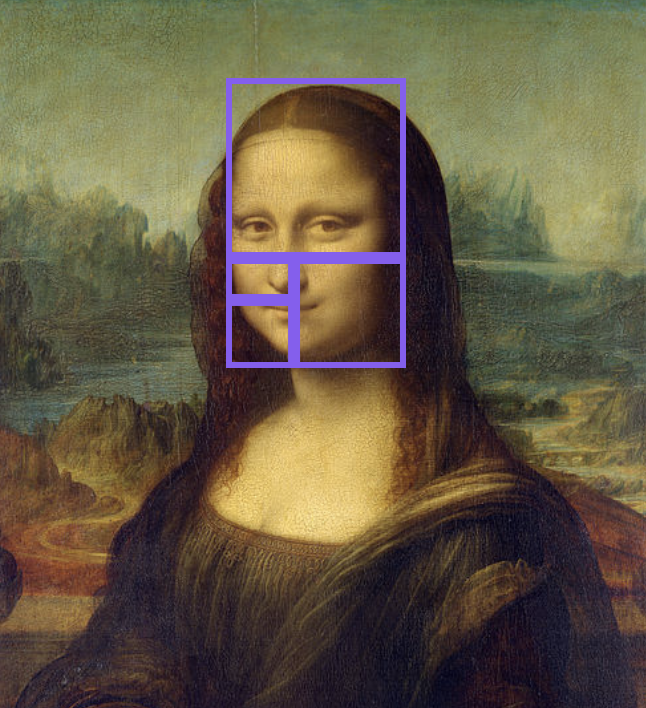
Allegedly, the head forms a golden rectangle with the eyes as the midpoint, and the mouth and nose as golden sections of the distance between the eyes and the chin. The Golden Ratio can even be found in our teeth, and profile when we turn our head to the side.

Image courtesy of Goldennumber.net

Research has found faces that align closest with the Golden Ratio are considered most beautiful.

Dr. Stephen R. Marquardt, who received his doctorate from UCLA and conducts studies on human attractiveness, believes the Golden Ratio is the mathematical formula that describes facial beauty.

 New call-to-action


from Marketing https://blog.hubspot.com/marketing/golden-ratio

Some of the most important questions you shouldn’t forget to ask a banner printing service

Banners and other kinds of printed promotional materials such as display and exhibition stands have been used since time immemorial, and their usefulness hasn’t waned.

In fact, they are more popular than ever, often trumping even the most complex advertising or marketing strategy and tools.

Sometimes, simple is best – and this is proven time and time again by roller banners, display stands, and the like. But if you would like to have banners and stands to use in your business, you have to choose a good printing service. Here are some of the most important questions you shouldn’t forget to ask a banner printing service.

What are the available sizes?

If you are planning to order a banner, you may think that the size will be big, but do you know how big? The size of your banner will depend on where you will place it, and the more options in sizes you have, the better. The smallest banner size will usually be 850mm, but this will also depend on the printing service. Before you decide on the size, think of where your banner will be placed or used first, but it pays to have more size options.

What material will you use?

There are several reasons why this is an essential question. One is if you are planning to use the banner or display stand outdoors, another is if your banner or stand will be used repeatedly, and the third is if your banner or stand will frequently be carted from one venue to another.

If your answer is yes to any of these reasons, then the material is of prime importance – you want a product made from stronger and sturdier material; material which is bound to last.

Think of your banners and exhibition stands as a marketing and advertising investment, especially if they will be used extensively. It’s better to choose a higher quality material which has a longer lifespan if the product will be regularly used. Only go for budget or economy if it will be used just once or twice.

Do you have an optional design service?

Another important question you should ask your prospective banner printer is whether they can offer an optional design service. This type of service is particularly useful if you’re trying to come up with your own design, but you think that your design isn’t good enough.

If the printer can offer a design service for a reasonable fee, then you may as well take advantage of it, especially if you want your design to have the right balance between professionalism and aesthetic appeal.

The post Some of the most important questions you shouldn’t forget to ask a banner printing service appeared first on TheMarketingblog.


from TheMarketingblog http://www.themarketingblog.co.uk/2018/11/some-of-the-most-important-questions-you-shouldnt-forget-to-ask-a-banner-printing-service-2/

What the Local Customer Service Ecosystem Looks Like in 2019

Posted by MiriamEllis

Everything your brand does in the new year should support just one goal: better local customer service.

Does this sound too simple? Doesn’t marketing brim with a thousand different tasks? Of course — but if the goal of each initiative isn’t to serve the customer better, it’s time for a change of business heart. By putting customers, and their problems, at the absolute center of your brand’s strategy, your enterprise will continuously return to this heart of the matter, this heart of commerce.

What is local customer service in 2019?

It’s so much more than the face-to-face interactions of one staffer with one shopper. Rather, it’s a commitment to becoming an always-on resource that is accessible to people whenever, wherever and however they need it. A Google rep was recently quoted as saying that 46% of searches have a local intent. Mobile search, combined with desktop and various forms of ambient search, have established the local web as man’s other best friend, the constant companion that’s ever ready to serve.

Let’s position your brand to become that faithful helper by establishing the local customer service ecosystem:

Your Key to the Local Customer Service Ecosystem

At the heart sits the local customer, who wants to know:

  • Who can help them, who likes or dislikes a business, who’s behind a brand, who’s the best, cheapest, fastest, closest, etc.
  • What the answer is to their question, what product/service solves their problems, what businesses are nearby, what it’s like there, what policies protect them, what’s the phone number, the website URL, the email address, etc.
  • Where a business is located, where to find parking, where something is manufactured or grown, etc.
  • When a business is open, when sales or events are, when busiest times are, when to purchase specific products/services or book an appointment, etc.
  • Why a business is the best choice based on specific factors, why a business was founded, why people like/dislike a business, etc.
  • How to get to the business by car/bike/on foot, how to learn/do/buy something, how to contact the right person or department, how to make a complaint or leave feedback, how the business supports the community, etc.

Your always-on customer service solves all of these problems with a combination of all of the following:

In-store

Good customer service looks like:

  • A publicly accessible brand policy that protects the rights and defends the dignity of both employees and consumers.
  • Well-trained phone staff with good language skills, equipped to answer FAQs and escalate problems they can’t solve. Sufficient staff to minimize hold-times.
  • Well-trained consumer-facing staff, well-versed in policy, products and services. Sufficient staff to be easily-accessible by customers.
  • In-store signage (including after-hours messaging) that guides consumers towards voicing complaints in person, reducing negative reviews.
  • In-store signage/messaging that promotes aspects of the business that are most beneficial to the community. (philanthropy, environmental stewardship, etc.) to promote loyalty and word-of-mouth.
  • Cleanliness, orderliness and fast resolution of broken fixtures and related issues.
  • Equal access to all facilities with an emphasis on maximum consumer comfort and convenience.
  • Support of payment forms most popular with local customers (cash, check, digital, etc.), security of payment processes, and minimization of billing mistakes/hassles.
  • Correctly posted, consistent hours of operation, reducing inconvenience. Clear messaging regarding special hours/closures.
  • A brand culture that rewards employees who wisely use their own initiative to solve customers’ problems.

Website

Good customer service looks like:

  • Content that solves people’s problems as conveniently and thoroughly as possible in language that they speak. Everything you publish (home, about, contact, local landing pages, etc.) should pass the test of consumer usefulness.
  • Equal access to content, regardless of device.
  • Easily accessible contact information, including name, address, phone number, fax, email, text, driving directions, maps and hours of operation.
  • Signals of trustworthiness, such as reviews, licenses, accreditations, affiliations, and basic website security.
  • Signals of benefit, including community involvement, philanthropy, environmental protections, etc.
  • Click-to-call phone numbers.
  • Clear policies that outline the rights of the consumer and the brand.

Organic SERPs

Good customer service looks like:

  • Management of the first few pages of the organic SERPs to ensure that basic information on them is accurate. This includes structured citations on local business directories, unstructured citations on blog posts, news sites, top 10 lists, review sites, etc. It can also include featured snippets.
  • Management also includes monitoring of the SERPs for highly-ranked content that cites problems others are having with the brand. If these problems can be addressed and resolved, the next step is outreach to the publisher to demonstrate that the problem has been addressed.

Email

Good customer service looks like:

  • Accessible email addresses for customers seeking support and fast responses to queries.
  • Opt-in email marketing in the form of newsletters and special offers.

Reviews

Good customer service looks like:

  • Accuracy of basic business information on major review platforms.
  • Professional and fast responses to both positive and negative reviews, with the core goal of helping and retaining customers by acknowledging their voices and solving their problems.
  • Sentiment analysis of reviews by location to identify emerging problems at specific branches for troubleshooting and resolution.
  • Monitoring of reviews for spam and reporting it where possible.
  • Avoidance of any form of review spam on the part of the brand.
  • Where allowed, guiding valued customers to leave reviews to let the greater community know about the existence and quality of your brand.

Links

Good customer service looks like:

  • Linking out to third-party resources of genuine use to customers.
  • Pursuit of inbound links from relevant sites that expand customers’ picture of what’s available in the place they live, enriching their experience.

Tech

Good customer service looks like:

  • Website usability and accessibility for users of all abilities and on all browsers and devices (ADA compliance, mobile-friendliness, load speed, architecture, etc.)
  • Apps, tools and widgets that improve customers’ experience.
  • Brand accessibility on social platforms most favored by customers.
  • Analytics that provide insight without trespassing on customers’ comfort or right to privacy.

Social

Good customer service looks like:

  • Brand accessibility on social platforms most favored by customers.
  • Social monitoring of the brand name to identify and resolve complaints, as well as to acknowledge praise.
  • Participation for the sake of community involvement as opposed to exploitation. Sharing instead of selling.
  • Advocacy for social platforms to improve their standards of transparency and their commitment to protections for consumers and brands.

Google My Business

Good customer service looks like:

  • Embrace of all elements of Google’s local features (Google My Business listings, Knowledge Panels, Maps, etc.) that create convenience and accessibility for consumers.
  • Ongoing monitoring for accuracy of basic information.
  • Brand avoidance of spam, and also, reporting of spam to protect consumers.
  • Advocacy for Google to improve its standards as a source of community information, including accountability for misinformation on their platform, and basic protections for both brands and consumers.

Customers’ Problems are Yours to Solve

“$41 billion is lost each year by US companies following a bad customer experience.”
-
New Voice Media

When customers don’t know where something is, how something works, when they can do something, who or what can help them, or why they should choose one option over another, your brand can recognize that they are having a problem. It could be as small a problem as where to buy a gift or as large a problem as seeking legal assistance after their home has been damaged in a disaster.

With the Internet never farther away than fingertips or voices, people have become habituated to turning to it with most of their problems, hour by hour, year by year. Recognition of quests for help may have been simpler just a few decades ago when customers were limited to writing letters, picking up phones, or walking into stores to say, “I have a need.” Now, competitive local enterprises have to expand their view to include customer problems that play out all over the web with new expectations of immediacy.

Unfortunately, brands are struggling with this, and we can sum up common barriers to modern customer service in 3 ways:

1) Brand Self-Absorption

“I’ve gotta have my Pops,” frets a boy in an extreme (and, frankly, off-putting) example in which people behave as though addicted to products. TV ads are rife with the wishfulness of marketers pretending that consumers sing and dance at the mere idea of possessing cars, soda, and soap. Meanwhile, real people stand at a distance watching the song and dance, perhaps amused sometimes, but aware that what’s on-screen isn’t them.

“We’re awesome,” reads too much content on the web, with a brand-centric, self-congratulatory focus. At the other end of the spectrum, web pages sit stuffed with meaningless keywords or almost no text as all, as though there aren’t human beings trying to communicate on either side of the screen.

“Who cares?” is the message untrained employees, neglected shopping environments, and disregarded requests for assistance send when real-world locations open doors but appear to put customer experience as their lowest priority. I’ve catalogued some of my most disheartening customer service interludes and I know you’ve had them, too.

Sometimes, brands get so lost in boardrooms, it’s all they can think of to put in their million-dollar ad campaigns, forgetting that most of their customers don’t live in that world.

One of the first lightbulb moments in the history of online content marketing was the we-you shift. Instead of writing, “We’re here, isn’t that great?”, we began writing, “You’re here and your problem can be solved.” This is the simple but elegant evolution that brands, on the whole, need to experience.

2) Ethical Deficits

Sometimes, customers aren’t lost because a brand is too inwardly focused, but rather, because its executives lack the vision to sustain an ethical business model. Every brand is tasked with succeeding, but it takes civic-minded, customer-centric leadership to avoid the abuses we are seeing at the highest echelons of the business world right now. Google, Facebook, Amazon, Uber, and similar majors have repeatedly failed to put people over profits, resulting in:

  • Scandals
  • Lawsuits
  • Fines
  • Boycotts
  • Loss of consumer trust
  • Employee loss of pride in company culture

At a local business level, and in a grand understatement, it isn’t good customer service when a company deceives or harms the public. Brands, large and small, want to earn the right of integration into the lives of their customers as chosen resources. Large enterprises seeking local customers need leadership that can envision itself in the setting of a single small community, where dishonest practices impact real lives and could lead to permanent closure. Loss of trust should never be an acceptable part of economies of scale.

The internet has put customers, staffers, and media all on the same channels. Ethical leadership is the key ingredient to building a sustainable business model in which all stakeholders take pride.

3) Lack of Strategy

Happily, many brands genuinely do want to face outward and possess the ethics to treat people well. They may simply lack a complete strategy for covering all the bases that make up a satisfying experience. Small local businesses may find lack of time or resources a bar to the necessary education, and structure at enterprises may make it difficult to get buy-in for the fine details of customer service initiatives. Priorities and budgets may get skewed away from customers instead of toward them.

The TL;DR of this entire post is that modern customer service means solving customers’ problems by being wherever they are when they seek solutions. Beyond that, a combination of sufficient, well-trained staff (both online and off) and the type of automation provided by tools that manage local business listings, reviews and social listening are success factors most brands can implement.

Reach Out...

We’ve talked about some negative patterns that can either distance brands from customers, or cause customers to distance themselves due to loss of trust. What’s the good news?

Every single employee of every local brand in the US already knows what good customer service feels like, because all of us are customers.

There’s no mystery or magic here. Your CEO, your devs, sales team, and everyone else in your organization already know by experience what it feels like to be treated well or poorly.

And they already know what it’s like when they see themselves reflected in a store location or on a screen.

Earlier, I cited an old TV spot in which actors were paid to act out the fantasy of a brand. Let’s reach back in time again and watch a similar-era commercial in which actors are paid to role play genuine consumer problems - in this case, a family that wants to keep in touch with a member who is away from home:

The TV family may not look identical to yours, but their featured problem - wanting to keep close to a distant loved one - is one most people can relate to. This 5-year ad campaign won every award in sight, and the key to it is that consumers could recognize themselves on the screen and this act of recognition engaged their emotions.

Yes, a service is being sold (long distance calling), but the selling is being done by putting customers in the starring roles and solving their problems. That’s what good customer service does, and in 2019, if your brand can parlay this mindset into all of the mediums via which people now seek help, your own “reach out and touch someone” goals are well on their way to success.

Loyal Service Sparks Consumer Loyalty

“Acquiring a new customer is anywhere from five to twenty times more expensive than retaining an existing one.”
–
Harvard Business Review
“Loyal customers are worth up to ten times as much as their first purchase.”
–
White House Office of Consumer Affairs

I want to close here with a note on loyalty. With a single customer representing up to 10x the value of their first purchase, earning a devoted clientele is the very best inspiration for dedication to improving customer service.

Trader Joe’s is a large chain that earns consistent mentions for its high standards of customer service. Being a local SEO, I turned to its Google reviews, looking at 5 locations in Northern California. I counted 225 instances of people exuberantly praising staff at just these 5 locations, using words like “Awesome, incredible, helpful, friendly, and fun!”. Moreover, reviewers continuously mentioned the brand as the only place they want to shop for groceries because they love it so much. It’s as close as you can get to a “gotta have my Pops” scenario, but it’s real.

How does Trader Joe’s pull this off? A study conducted by Temkin Group found that, “A customer’s emotional experience is the most significant driver of loyalty, especially when it comes to consumers recommending firms to their friends.” The cited article lists emotional connection and content, motivated employees who are empowered to go the extra mile as keys to why this chain was ranked second-highest in emotion ratings (a concept similar to Net Promoter Score). In a word, the Trader Joe’s customer service experience creates the right feelings, as this quick sentiment cloud of Google review analysis illustrates:

This brand has absolutely perfected the thrilling and lucrative art of creating loyal customers, making their review corpus read like a volume of love letters. The next move for this company - and for the local brands you market - is to “spread the love” across all points where a customer might seek to connect, both online and off.

It’s a kind of love when you ensure a customer isn’t misdirected by a wrong address on a local business listing or when you answer a negative review with the will to make things right. It’s a kind of love when a company blog is so helpful that its comments say, “You must be psychic! This is the exact problem I was trying to solve.” It’s a kind of love when a staff member is empowered to create such a good experience that a customer tells their mother, their son, their best friend to trust you brand.

Love, emotions, feelings — are we still talking about business here? Yes, because when you subtract the medium, the device, the screen, it’s two very human people on either side of every transaction.


Sign up for The Moz Top 10, a semimonthly mailer updating you on the top ten hottest pieces of SEO news, tips, and rad links uncovered by the Moz team. Think of it as your exclusive digest of stuff you don't have time to hunt down but want to read!


from The Moz Blog http://tracking.feedpress.it/link/9375/10725174

Sunday, 4 November 2018

Nursing Laughter Spot : The one about falling in love with a nurse

A young man was so paranoid about the size of his penis that he could never work up the courage to have sex.

Then one day he fell in love with a nurse. One fine evening, they went back to her place. She put on some soft music and led him into the bedroom. Totally mortified, he told her of his problem.

“Don’t worry,” She said. “I’m a nurse. I won’t laugh.”
Blushing the man drops his trousers.
“It’s OK,” she said. “I’ve seen lots smaller than that.”
“Really?” the relieved man asked.

She nodded, “Yes,” she chuckled, “I used to work in the maternity unit.” ðŸ˜‚


The post Nursing Laughter Spot : The one about falling in love with a nurse appeared first on TheMarketingblog.


from TheMarketingblog http://www.themarketingblog.co.uk/2018/11/nursing-laughter-spot-the-one-about-falling-in-love-with-a-nurse/

The 7 Best Free Email Accounts and Service Providers for 2019

You need it for networking, job recruitment, downloading resources, transferring files, setting reminders, meeting with colleagues, and so much more.

Even with the rise of office chat platforms, you still depend on email for a surprising number of things. But unfortunately, not every email service is completely free. And even the free ones might not be the easiest to use or have all the features you need.

Click here to download our free beginner's guide to email marketing.

It can be a challenge to find an email service provider at no cost that balances the right features with usability. To help make your search easier, we put together a list of the different types of email accounts you can set up, followed by the seven best email service providers you can host your account on right now for free.

Types of Email Accounts

There are two main types of email service providers to choose from: email clients and webmail. When you use your provider to access your email from a different device or location online, you can use one of three major email protocols to do so: POP3, IMAP, and Exchange.

Let's briefly go over these different types of providers and protocols.

Email Clients

Email clients are software applications that you install onto the computer itself to manage the email you send and receive. To access this email, the client interacts with a remote email server.

Email clients you've likely heard of include Microsoft Outlook, Mozilla Thunderbird, and Apple Mail.

If you want to access this type of email from the web, rather than the client's computer application, the email client uses one of the email protocols described below. For example, although you might have Outlook installed on your computer, you can also log in to your email account via outlook.com using a specific email protocol.

Webmail

Webmail is a form of email you access exclusively from the internet, and therefore exists primarily on the cloud rather than your computer. Instead of an installed application fetching your email, you manage your inbox right from your internet browser.

Webmail providers you've likely heard of include Gmail, Yahoo! Mail, and AOL (all of which have made our list of best free email accounts, below).

If you want to access your webmail from a mail app on your mobile device, rather than your desktop web browser, your webmail provider can use one of the email protocols described below.

Now, before we get into the best free email accounts, let's talk about those email protocols.

Email Protocols

Email protocols are the systems that actually retrieve your email for you. They can be used to fetch email client accounts on the internet, and fetch webmail accounts on a mobile app. Here are the three main types of email protocol your account can use.

POP3

POP stands for "post office protocol," and is best suited for people who have just one email account and email client. POP3 is the latest version of this email protocol, and allows you to access email while offline. It therefore requires less internet bandwidth.

IMAP

IMAP stands for "internet mail access protocol," and is one of the older email protocol available today. IMAP4 is considered the latest version, and unlike the POP protocol, you do not download your email to your offline email client. Instead, all your email stays online while you're accessing and managing it.

IMAP is particularly useful for people who have more than one email account and access them from multiple devices or locations.

Exchange

Exchange is a Microsoft email protocol, and is pretty similar to the IMAP protocol explained above. This protocol allows you to not only access your email over the internet from multiple devices, but also tasks, calendars, and contact information tethered to that email address. For this reason, it's particularly helpful to organizations whose employees share many types of information and collaborate remotely.

Now, take a look at seven of the best free email service providers you can get your hands on today -- both webmail and email clients included. For each email service provider, we highlighted a unique feature to help you find the best fit.

1. Gmail

Unique Feature: Native File Collaboration

Sign up here.

Type of email: Webmail

Who should use it: anyone who already uses and loves the rest of Google's products.

It might seem like an obvious top pick, but Gmail is just too versatile to not award the first slot. Gmail has the second-highest email provider market share (behind Apple iPhone's native email app), according to Litmus Labs. And ironically, one of the reasons Gmail has become so popular is because of all the communication options in your inbox that don't involve email.

Gmail is an everyday email inbox you can sign up for by registering for a Google account. But it's built into Google Suite, a group of free apps that allow you to chat, video-conference, and share files with the people in your contact list.

Google Hangouts, available from your inbox's left sidebar (or the right -- you can customize how you inbox is displayed), lets you text and video chat with other Gmail users for the things that might not warrant an email message. Like most other email accounts today, Gmail also has an intuitive calendar where you can set meetings and reminders.

Unlike other email accounts, you can use your Gmail address to log into and manage your YouTube account, as well as collaborate on shared documents and spreadsheets right from a cloud-based Google Drive.

Offering a generous 15 GB of free email storage, Gmail does everything it can to make your inbox less chaotic, including advanced filters that automatically push emails into separate folders as they arrive. And none of these functions costs a dime.

2. AOL

Unique Feature: Unlimited Storage

Sign up here.

Type of email: Webmail

Who should use it: people who use email for most of their communication.

America Online (I feel nostalgic just typing those words) has quietly kept up with today's standards for a good user experience. The classic AOL is now once again one of the best free email accounts available to you.

Purchased by Verizon in 2015, AOL delivers you email from its classic news-driven homepage, and comes with the contemporary spam filters and virus protection you'd expect from your email provider. You can also send text and instant messages from specific windows in your email inbox.

AOL does have something over Gmail, though: unlimited storage. Additionally, you can import email contacts from a CSV, TXT, or LDIF file so you're not creating your "buddy list" (get it?) from scratch.

3. Outlook

Unique Feature: Multiple App Integrations

Sign up here.

Type of email: Email client

Who should use it: people who use many different platforms to connect with others.

If you ever cringed at the sight of a "Hotmail.com" email address, you can thank Outlook for this outdated domain name. But there's good news: Microsoft has reinvented its longstanding email service, and your free Outlook.com email address has many progressive features waiting for you.

While it touts a calendar and message filter that is similar to Gmail, Outlook also integrates with a number of other popular communication apps. You can connect Skype, Facebook, PowerPoint, PayPal, and even task-management software such as Trello -- making it very easy to reach and work with non-Outlook users without leaving your inbox.

Outlook offers 15 GB of free storage for each user, along with a super-clean interface.

4. Zoho

Unique Feature: 25 Business Addresses

Sign up here.

Type of email: Webmail

Who should use it: startups and small businesses.

This is the first of the lesser-known free email accounts to make our list, but it holds a lot of potential for businesses.

The first thing you'll notice about Zoho is its user-friendliness. From integrating with Google Drive, Box, and other cloud-based file managers, to its built-in task manager, this email service offers a simple way to accomplish all of your daily tasks.

The real difference-maker, though, is the ability to customize the domain name for up to 25 connected email addresses. Want to replace "@zoho.com" with the name of your business's website? You can do so under Zoho Lite, which gives you 5 GB for free -- all under username@yourdomainname.com.

5. Mail.com

Unique Feature: 200 Custom Domain Names

Sign up here.

Type of email: Webmail

Who should use it: small businesses, freelancers, and the self-employed.

It doesn't get more self-explanatory than "Mail.com," does it? This email provider knows its audience -- or should I say, audiences.

Right off the bat, you'll probably notice Mail.com doesn't have stellar storage space compared to the options above: only 2 GB. But what this webmail service lacks in gigabytes it makes up for with … drumroll … 200 free custom domain names. You can replace "@mail.com" at the end of your username with just about anything that describes you. Here are some options Mail.com has precreated for you to choose from:

  • Bartender.net
  • Musician.org
  • Columnist.com
  • Engineer.com
  • Accountant.com
  • Toothfairy.com (who knew she was online?)

Mail.com doesn't rest on its 200 laurels, though, as the email provider also comes with a calendar for creating and tracking your events each week.

6. Yahoo! Mail

Unique Feature: Media and attachment history

Sign up here.

Type of email: Webmail

Who should use it: creatives and those who send and receive attachments frequently via email.

Yahoo! Mail, another well-known platform, sits just behind AOL in storage space with a whopping 1 TB (that's a terabyte) for free, along with a few key social media integrations.

In addition to custom background themes and being able to search key information from your inbox, Yahoo! Mail also makes it easy to find every photo, video, and document you've ever attached or received via email in their own tabs on your inbox's sidebar. This makes the platform especially appealing to those who share documents on a regular basis or simply want an album made of every photo they've ever had shared.

7. ProtonMail

Unique Feature: Encrypted email

Sign up here.

Type of email: Webmail

Who should use it: people who send and receive sensitive information.

ProtonMail offers just 500 MB of free space, but for the worthy trade of encrypted email, allowing you to send messages that nobody else can see, and disappear after a month.

What's the catch? Is the service hard to use? As with most webmail platforms, ProtonMail is easy to use on any device without any software needed to encrypt your emails. Its inbox interface is as easy to understand at a glance as the other email services on this list, and offers quick color-coded labels to help you further organize which emails deserve the most care and protection.

And with that, you have some of the best options for free email accounts in 2019. But who knows? Your next email address could be entirely different while giving you just what you need to succeed.
Free Download Beginner’s Guide to Email Marketing


from Marketing https://blog.hubspot.com/marketing/free-email-accounts

Friday, 2 November 2018

Female empowerment : Watch Charlize Theron in Christian Dior’s new fragrance campaign

An absurdly beautiful lady in a swimming pool, seemingly filled with 24-karat gold water, opens her eyes and looks directly into your soul.

She slowly moves through the water and almost flashes her bare breasts, but the camera cuts away.

We see other women lounging motionlessly around the pool. Somehow nobody’s checking their smartphones. The pretty pool lady steps out of the water and she’s making intense eye contact again. What does she want from you? A towel? A cigarette? (Did she and you just make love? You can’t remember!)

Suddenly the pretty pool lady and some of her pals are in glittery gold gowns, and they’re marching toward you in runway-worthy formation, like a migrant caravan of Stepford Wives. Cut to a giant bottle of perfume floating over the pool. The end.

That’s the plot, more or less, of Christian Dior’s new fragrance campaign. Dior, it should be noted, sees things somewhat differently, judging from the brand’s breathless description below the YouTube version of the ad: “Discover the new J’adore Absolu film directed by the visionary Romain Gavras and his modern unique eye, starring our sublime muse Charlize Theron. An extraordinary universe. An ode to women, all women, stronger together as one.”

Got that? It was a dramatic expression of female empowerment!

If you were thinking something more along the lines of “fembot spa day,” then obviously you are neither visionary nor sublime.

Read MORE >>>>>>>>>>

The post Female empowerment : Watch Charlize Theron in Christian Dior’s new fragrance campaign appeared first on TheMarketingblog.


from TheMarketingblog http://www.themarketingblog.co.uk/2018/11/female-empowerment-watch-charlize-theron-in-christian-diors-new-fragrance-campaign/

Is Amazon Really Gaining on Google's Search Traffic? [New Data]

There's been some speculation that Amazon might be creeping into Google's (search) territory.

In some ways, that's at least partially true. Amazon has showed some promise of potentially overtaking Google's paid ads business, and its market share of product searches (54%) outnumbers that of Google's (46%). 

But not all search is created equal. We dug a little deeper into the numbers, looking at a recent report and running our own surveys to see how people search for different types of information.

The Info-Seeking Market Share

While it may be true that Amazon is gaining on Google's share of product-specific searches, when it comes to general information searches, Google still reins supreme. 

According to a recent report from SparkToro, Google's domination in the area of general search traffic is quite significant, with 90% of web searches taking place on its site. That includes not only the primary Google search bar, but also, queries taking place on its Images and Maps products.

js-search-us-09-2018-pie800px

Source: SparkToro

To see how that information might uphold among a census-style audience, we asked 860 people across the U.S., UK, and Canada: Which resource do you most commonly use when searching for information online?

Which resource do you most commonly use when searching for information online_

Data collected with Lucid

Our results lined up with SparkToro's, with 82.7% of respondents indicating that Google is their primary resource for finding information online.

When including respondents who chose "Google Maps" or "Google Images," that number increases to 84.7%.

The Product-Seeking Market Share

Here's where things start to get interested. As we previously mentioned, studies show that over half of all product searches take place on Amazon. And, according to our own previous data, people are more likely to buy something based on an ad they saw on Amazon, versus an ad they saw on Google.

However, when we asked 827 people across the U.S., UK, and Canada -- Which resource do you most commonly use when searching for products online? -- the results looked a bit different.

Which resource do you most commonly use when searching for products online_

Data collected with Lucid

Here, only 10% of respondents said they use Amazon as the primary resource for searching for products.

A few things could explain that -- namely, it's possible that survey participants use Google as the primary source of information to seek information like the "best" products in a certain category.

As Andrea Leigh of Ideoclick, a company that works with manufacturers to optimize online sales, explained at Code Commerce in September -- Amazon is most effective when it comes to specific, niche product searches. Think: queries like, "Probiotics for children." That could one source, for instance, of the aforementioned 54% figure.

So, Does Amazon Stand a Chance?

When it comes to general searches, it could be quite some time before Amazon can see eye-to-eye with Google's traffic. As Rand Fishkin, author of the SparkToro study put it, "Google [has] a near-monopoly" of web searches. 

But that doesn't mean Amazon should be completely discounted, for a number of reasons -- a major consideration being voice search. In 2017, for instance, eMarketer found that 70.6% of smart speaker users owned an Amazon Echo, versus the 23.8% who used a Google Home.

However, we don't know if those uses pertained to information-seeking or product-buying -- and other studies have shown that even if it's not used by as many people, Google's Assistant (the voice assistant that powers the Google Home smart speaker) answers questions correctly 17% more of the time than Amazon's Alexa. 

Another key question to ask when looking at this data: Does Amazon actually view Google as a threat? And, is its primary goal or concern to reign supreme in the world of web searches?

"If you view search as a pie, sure, Amazon doesn’t have a huge piece of it," says Keith Anderson, SVP of Strategy & Insight at Profitero, an eCommerce performance analytics platform. "Amazon isn’t particularly threatened by Google as a search engine [and] has a different business model that has different incentives."

So, for Amazon, product search could remain the name of the (winning) game -- especially when it comes to understanding the intent behind those searches.

"What Amazon is building really quickly is an ad network and targeting capability at the intersection of ads, and the ability to buy really seamlessly," Anderson explains. "Because they have so much information about buyer intent and buyer behavior, they can build a level of targeting that’s very hard for Google to match."

In other words, he says -- for now -- there's no need for Amazon "to try to out-Google Google."


from Marketing https://blog.hubspot.com/marketing/amazon-google-search-behavior